Zhejiang Zhongjian Road&Bridge Machinery Co., Ltd


-
-
About us
-
-
Engineering
-
Contact
-

11
2026
-
09
Portable Gantry Crane vs Heavy Gantry Crane: How to Choose the Right Lifting Solution
Portable Gantry Crane vs Heavy Gantry Crane: Compare mobility, lifting capacity, height, and applications to choose the right solution.
Author:
When selecting a gantry crane, one question often comes first: should a workshop choose a Portable Gantry Crane vs Heavy Gantry Crane? Although both systems are designed to provide reliable lifting support, they are not intended for the same working conditions. A compact portable unit may be ideal for maintenance, equipment installation, and occasional lifting, while a heavy-duty gantry crane is designed for demanding industrial environments where high load capacity, structural stability, and continuous operation are more important.
Understanding this difference can help workshops, maintenance teams, fabrication facilities, and heavy industrial plants avoid choosing a crane based only on lifting capacity. The right solution depends on load requirements, working frequency, available space, mobility, installation conditions, and the type of production environment.
Portable Gantry Crane for Flexible Workshop Lifting
A portable gantry crane is generally designed around flexibility. Compared with a large fixed or rail-mounted crane system, it can be installed or repositioned with much less effort. This makes it particularly useful for small workshops, equipment maintenance areas, machine repair stations, warehouses, and temporary lifting operations.
For example, a maintenance team may need to remove a motor from a machine, position a gearbox, replace a pump, or move a heavy component during equipment servicing. These jobs do not necessarily require a permanent overhead crane. A portable structure can provide lifting capability exactly where it is needed.
The main advantage is not maximum lifting capacity. It is the ability to bring lifting equipment to different working locations.
Mobile Gantry Crane and the Value of Mobility
A mobile gantry crane takes this concept further by emphasizing movement around the working area. Depending on the design, wheels or other mobility features allow operators to position the crane where lifting work is required.
This can be particularly useful when a workshop has several maintenance stations but does not want to install a separate crane at every location.
However, mobility also creates an important selection boundary. A mobile crane should not automatically be considered a replacement for a large industrial lifting system. As load weight increases, structural stability, wheel loading, floor conditions, lifting height, and operating safety become increasingly important.
For occasional workshop lifting, mobility can be a major advantage. For continuous heavy production, structural capacity and integration with the facility may become more important than mobility.
Aluminum Gantry Crane vs Steel Gantry Crane
Material selection is another important factor when comparing portable lifting systems.
An aluminum gantry crane is attractive when low structural weight and easy handling are priorities. It can be suitable for maintenance teams that frequently assemble, move, or store their lifting equipment. Its lightweight structure can make transportation and repositioning easier.
A steel portable gantry crane, by comparison, can provide a more robust structure for applications requiring greater load capacity and rigidity. The trade-off is that the crane itself is generally heavier and may require more effort to move or install.
Therefore, aluminum and steel should not simply be compared by asking which material is stronger. The better question is: what combination of lifting capacity, mobility, working frequency, and structural requirements does the application demand?
For small maintenance operations, an aluminum design may offer useful portability. For heavier workshop lifting, a steel structure can be more appropriate.
Adjustable Height Gantry for Changing Work Conditions
An adjustable height gantry can be useful when lifting requirements vary between different machines or workstations. Adjustable configurations can provide greater flexibility where the available clearance or lifting height is not always the same.
This is especially relevant in maintenance environments. A workshop may need to lift components from different machine heights, work underneath equipment, or position loads in areas with limited overhead clearance.
Nevertheless, adjustability should not be confused with unlimited lifting flexibility. The permitted load, working height, span, and structural configuration must always match the crane's engineering specifications.
For buyers, this means adjustable height should be considered as one part of the overall selection rather than the only deciding factor.
Shop Gantry Crane for Maintenance and Fabrication
A shop gantry crane is often positioned between basic portable lifting equipment and large industrial crane installations.
It can serve fabrication shops, repair workshops, machine-building facilities, warehouses, and equipment service areas where lifting is necessary but a permanent overhead crane may not be practical.
Typical applications include:
- Machine installation and removal
- Motor and gearbox handling
- Pump and valve maintenance
- Equipment assembly
- Workshop material handling
- Fabrication and repair operations
- Loading and positioning of heavy components
The key consideration is the frequency and weight of lifting. If a shop regularly handles moderate loads, a properly selected steel gantry can offer a practical balance between flexibility and capacity. If loads become significantly heavier or lifting becomes part of continuous production, a larger industrial crane should be considered.
Heavy Industrial Gantry Crane for Demanding Production
A heavy industrial gantry crane serves a fundamentally different purpose.
Instead of prioritizing portability, heavy industrial systems prioritize load-bearing capability, structural rigidity, operating stability, and integration into industrial production environments.
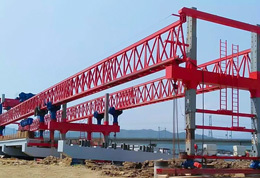
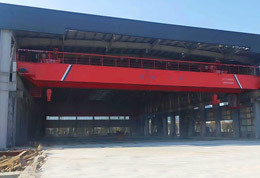
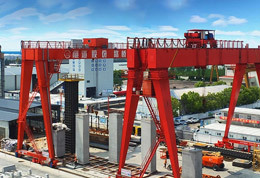
Box-type gantry crane structures are commonly associated with demanding lifting applications because their engineered steel framework is designed around substantial structural loads. Rather than being moved from one small maintenance station to another, this type of crane is normally selected as part of a larger material-handling system.
Heavy industrial gantry cranes can be considered for environments such as manufacturing plants, machinery production facilities, steel-related operations, large fabrication yards, construction equipment production, and other industrial sites where heavy components need to be repeatedly lifted and transported.
Here, the crane is not simply a temporary lifting tool. It becomes part of the production infrastructure.
Portable Gantry Crane vs Heavy Gantry Crane: The Key Differences
The difference can be understood through five basic factors.
Load capacity: Portable cranes are generally selected for lighter or moderate lifting requirements, while heavy industrial gantry cranes are engineered for substantially heavier loads.
Mobility: Portable and mobile gantry cranes are designed to provide flexibility between workstations. Heavy gantry cranes generally prioritize stable operation within a defined industrial working area.
Installation: A portable system can usually be deployed more quickly and with less infrastructure. A large industrial crane requires more planning, structural engineering, installation work, and site preparation.
Application: Portable systems are commonly associated with workshops, maintenance, repair, and temporary lifting. Heavy systems are more suitable for production lines, large fabrication areas, and heavy industrial material handling.
Working frequency: Occasional lifting favors flexibility. Repetitive industrial lifting favors a crane designed specifically for long-term production requirements.
When Should You Choose a Portable Gantry Crane?
A portable solution may be appropriate when:
- Loads are relatively moderate.
- Lifting locations change frequently.
- The crane must be moved between workstations.
- The workshop has limited permanent crane infrastructure.
- Lifting is mainly related to maintenance or repair.
- Fast setup is more important than maximum capacity.
In these situations, portability can provide more practical value than investing in a large permanent lifting system.
When Should You Choose a Heavy Industrial Gantry Crane?
A heavy-duty solution becomes more appropriate when:
- Loads are consistently heavy.
- Lifting is part of daily production.
- High structural stability is required.
- The crane operates within a defined industrial area.
- Large components must be repeatedly moved.
- Long-term lifting performance is more important than easy relocation.
For these applications, a box-type gantry crane can provide the structural platform required for serious industrial material handling.
A Simple Decision Route for Crane Selection
The selection process does not have to be complicated.
Need occasional workshop lifting?
→ Consider a portable or shop gantry crane.
Need to move the crane between workstations?
→ Consider a mobile gantry crane.
Need low structural weight and easy handling?
→ Consider an aluminum gantry crane.
Need a stronger portable structure for heavier workshop loads?
→ Consider a steel gantry crane.
Need repeated heavy lifting in a production facility?
→ Consider a heavy industrial gantry crane.
Need large-scale industrial material handling?
→ Consider a box-type or rail-integrated heavy gantry system.
This simple route helps separate cranes by application instead of comparing them only by product name.
Do Not Confuse Portable, Mobile and Rail-Mounted Gantry Cranes
One of the most common purchasing mistakes is treating every gantry crane as the same type of equipment.
A portable gantry is primarily about flexible deployment. A mobile gantry emphasizes movement within a working area. An aluminum gantry focuses on reducing equipment weight and improving handling. A steel workshop gantry provides a stronger solution for demanding maintenance and fabrication tasks.
A large rail-mounted or industrial gantry crane belongs to another category. It is designed around heavier loads, controlled travel paths, structural stability, and integration with an industrial site.
Therefore, the choice should begin with the working scenario rather than the crane name.
Choosing the Right Gantry Crane for Long-Term Value
The lowest initial purchase price is not necessarily the lowest total cost. A crane that is too small may limit production and require additional lifting equipment later. A large industrial crane may also be an unnecessary investment if the actual requirement is occasional maintenance lifting.
The better approach is to match the crane with the real operating environment.
For a small workshop, flexibility and fast deployment may deliver the greatest value. For a maintenance department, mobility and adjustable working configurations may be more important. For a heavy manufacturing facility, load capacity, structural stability, travel configuration, and long-term operating requirements should take priority.
This is why Portable Gantry Crane vs Heavy Gantry Crane should not be treated as a simple competition between two products. They solve different lifting problems.
The portable gantry crane is about flexibility. The heavy industrial gantry crane is about capacity and industrial stability. Understanding this boundary allows buyers to select equipment that fits the actual application instead of paying for capabilities they do not need—or choosing a lightweight solution that cannot support their production demands.
Key words:
Related news
WeChat:
+86 18888789997
E-mail:
New plant area:
Gaojing Village, Dongguan Street, Shangyu District, Shaoxing City, Zhejiang Province
SEND AN INQUIRY
*Leave your contact information to get a free product quote
Be a professional lifting equipment design manufacturer