Zhejiang Zhongjian Road&Bridge Machinery Co., Ltd


-
-
About us
-
-
Engineering
-
Contact
-

22
2026
-
08
Exploring the Future of Building with Form Traveller Innovations
Exploring the Future of Building with Form Traveller Innovations Table of Contents 1. Introduction to Form Traveller Innovations 2. What is a Form Traveller? 3. Historical Overview of Form Travellers 4. Key Benefits of Form Traveller Innovations 4.1 Enhanced Efficiency and Productivity 4.2 Cost-Effectiveness in Construction 4.3 Sustainability and Environmental Impac
Author:
Exploring the Future of Building with Form Traveller Innovations
Table of Contents
- 1. Introduction to Form Traveller Innovations
- 2. What is a Form Traveller?
- 3. Historical Overview of Form Travellers
- 4. Key Benefits of Form Traveller Innovations
- 4.1 Enhanced Efficiency and Productivity
- 4.2 Cost-Effectiveness in Construction
- 4.3 Sustainability and Environmental Impact
- 5. Future Trends in Construction with Form Travellers
- 6. Real-World Applications of Form Traveller Innovations
- 7. Challenges and Solutions in Implementing Form Travellers
- 8. Case Studies: Successful Implementation of Form Travellers
- 9. Conclusion
- 10. FAQs
1. Introduction to Form Traveller Innovations
In the fast-paced world of construction, challenges abound—from tight deadlines to cost constraints and the ever-pressing need for sustainability. As we navigate these challenges, innovations such as **Form Traveller Innovations** are reshaping our approach to building. By optimizing construction methodologies and introducing efficient techniques, form travellers stand at the forefront of technological advancements in the engineering and construction machinery sector.
2. What is a Form Traveller?
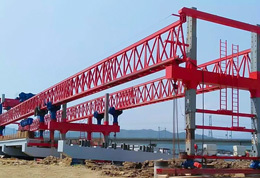
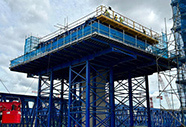
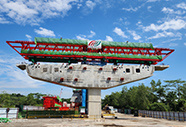
A **Form Traveller** is a sophisticated piece of equipment designed to facilitate the construction of complex structures, particularly in bridge and high-rise building projects. It operates by moving horizontally or vertically along a predetermined path while supporting the formwork used to create concrete structures. The system allows for the precise placement of concrete, making it invaluable for constructing large spans and complex shapes.
3. Historical Overview of Form Travellers
The history of form travellers can be traced back to the mid-20th century when the demand for more efficient construction methods began to rise. Early iterations of form travellers were simple platforms that helped workers cast concrete in situ. However, as engineering demands grew, so did the complexity of these machines. Today’s form travellers are equipped with advanced hydraulic systems and electronic controls, allowing for increased accuracy, safety, and efficiency.
4. Key Benefits of Form Traveller Innovations
Form Traveller Innovations bring a myriad of benefits to the construction industry.
4.1 Enhanced Efficiency and Productivity
One of the most significant advantages of using form travellers is the **enhanced efficiency** they offer. By reducing the time required for formwork setup and concrete pouring, these systems enable projects to be completed faster. This efficiency not only shortens construction timelines but also allows for better allocation of resources.
4.2 Cost-Effectiveness in Construction
Incorporating form travellers into construction projects leads to substantial cost savings. The reduction in labor costs, coupled with the minimized risk of material waste, translates to lower overall project expenses. Additionally, the ability to construct complex designs without excessive rework further enhances cost-effectiveness.
4.3 Sustainability and Environmental Impact
As the construction industry faces increasing scrutiny regarding its environmental impact, form travellers offer a pathway to more sustainable building practices. By optimizing material use and decreasing waste, these innovations align with contemporary sustainability goals. Moreover, the efficiency of the construction process often results in less energy consumption and fewer emissions.
5. Future Trends in Construction with Form Travellers
The future of construction with form travellers looks promising, with several trends on the horizon:
- **Automation and Robotics**: The integration of robotics in form traveller systems is poised to enhance precision and reduce human error.
- **3D Printing Technology**: As 3D printing advances, we may see hybrid systems that combine form travellers with additive manufacturing techniques.
- **Smart Technology**: IoT-enabled form travellers will likely provide real-time data analytics, facilitating informed decision-making during construction.
6. Real-World Applications of Form Traveller Innovations
Form traveller innovations have found extensive applications across various sectors, including:
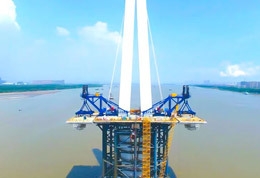
- **Bridges**: Many modern bridges employ form travellers for their ability to handle complex geometries and long spans.
- **High-Rise Buildings**: In urban environments, form travellers enable the construction of skyscrapers with faster turnaround times and enhanced structural integrity.
- **Industrial Facilities**: Large industrial buildings benefit from the precision and efficiency of form travellers, allowing for rapid project completion.
7. Challenges and Solutions in Implementing Form Travellers
While form travellers offer numerous advantages, the implementation of such systems is not without challenges:
- **Initial Investment**: The upfront cost of acquiring form traveller systems can be significant. However, the long-term savings often outweigh this initial expenditure.
- **Training and Skill Development**: Operators must be adequately trained to manage these sophisticated systems. Investing in training programs can help mitigate this challenge.
- **Logistical Issues**: Transporting and installing form travellers can pose logistical hurdles. Careful planning and collaboration with experienced contractors can alleviate these issues.
8. Case Studies: Successful Implementation of Form Travellers
Numerous projects worldwide illustrate the successful use of form traveller innovations:
- **The Millau Viaduct, France**: This iconic bridge utilized advanced form traveller technology to achieve its remarkable height and span.
- **Burj Khalifa, UAE**: The construction of the world’s tallest building leveraged form traveller systems, allowing for the intricate design and structure to be realized efficiently.
9. Conclusion
As we venture into the future of construction, innovations like **Form Traveller Innovations** are not merely tools but essential components driving efficiency, sustainability, and adaptability in the industry. By embracing these advanced technologies, we can meet the ever-evolving demands of urban development while ensuring that our building practices are both economically viable and environmentally responsible.
10. FAQs
1. What are the primary benefits of using form travellers in construction?
The primary benefits include enhanced efficiency, cost-effectiveness, and a smaller environmental footprint due to optimized material usage.
2. How do form travellers improve construction timelines?
Form travellers reduce the time required for formwork setup and concrete pouring, enabling faster project completion.
3. Are form travellers suitable for all types of construction projects?
While highly beneficial for large and complex structures, form travellers are most effective in projects such as bridges and high-rise buildings.
4. What training is required to operate form travellers?
Operators should undergo specialized training to manage the advanced technology and safety protocols associated with form travellers.
5. How can companies mitigate the initial investment in form traveller systems?
Companies can focus on the long-term savings and productivity gains associated with form travellers, which often outweigh the initial costs.
Key words:
Related news
WeChat:
+86 18888789997
E-mail:
New plant area:
Gaojing Village, Dongguan Street, Shangyu District, Shaoxing City, Zhejiang Province
SEND AN INQUIRY
*Leave your contact information to get a free product quote
Be a professional lifting equipment design manufacturer