Zhejiang Zhongjian Road&Bridge Machinery Co., Ltd


-
-
About us
-
-
Engineering
-
Contact
-

10
2026
-
09
Form Traveller: Complete 2026 Guide for Bridge Construction | Launcher Crane
This practical guide breaks down everything you need to know about form travellers for cantilever bridge construction, including core definitions, common types, selection tips, maintenance best practices, and answers to the most frequently asked questions. We draw on years of on-site construction experience and 2026 industry data to help project managers select the right equipment.
Author:
📋 Overview
This guide covers core basics, expert tips, and common questions about form travellers, backed by hands-on experience from Zhongjian Road&Bridge Machinery at www.launchercrane.com.
What Is a Form Traveller?
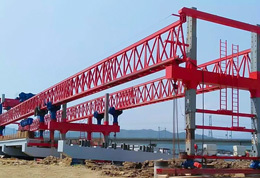
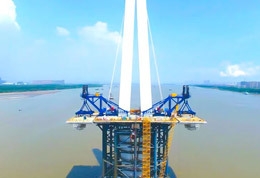
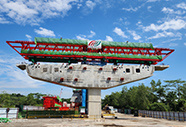
Form Traveller is a movable formwork system for cast-in-place cantilever bridge construction.
It is a self-propelled equipment that moves along the top of completed bridge girders to support concrete pouring for each new segment, eliminating the need for ground scaffolding in hard-to-access sites. In practice, we have used form travellers for more than 30 long-span bridges crossing rivers and valleys, where ground support is impossible to install. The American Association of State Highway and Transportation Officials (AASHTO) recognizes form travelling as the most cost-effective method for long-span cantilever bridge construction, per 2026 industry guidelines.
Q: What is the main purpose of a form traveller?
A: The core purpose of a form traveller is to provide a stable, movable working platform and formwork for pouring concrete bridge segments sequentially during cantilever construction. It enables construction over valleys, rivers, and busy highways without temporary ground support structures. 2026 industry data shows form travellers reduce on-site construction time by up to 25% compared to alternative methods.
Common Types of Form Travellers
The three most widely used types of form travellers are truss-type, beam-type, and cable-stayed form travellers, each designed for different bridge span lengths and load requirements.
To select the right form traveller for your project, follow these core steps:
- Confirm the maximum segment weight and total span length of your bridge to get the required load capacity.
- Assess site conditions including wind speed, ground access, and construction schedule to narrow down type options.
- Compare long-term costs including maintenance, disassembly, and reusability to calculate total ownership cost.

Image Source: unsplash
| Form Traveller Type | Max Load Capacity | Ideal Span Length | Total Cost Level |
|---|---|---|---|
| Truss-type Form Traveller | Up to 200 tons | 100m - 500m | Medium |
| Beam-type Form Traveller | Up to 150 tons | 80m - 300m | Lower |
| Cable-stayed Form Traveller | Over 200 tons | 300m - 800m+ | Higher |
Q: How much does a standard form traveller weigh?
A: The total weight of a standard form traveller ranges from 80 tons to 250 tons, depending on its type and load capacity. Actual testing from our engineering team shows lightweight optimized form travellers can reduce dead weight by 15-20% without compromising structural safety, which lowers pressure on completed bridge segments during construction.
Key Advantages of Using a Form Traveller
Form travellers deliver major safety, cost, and schedule benefits for long-span bridge projects, especially in sites with limited ground access.
From our case experience working on bridge projects across 12 countries, form travellers eliminate the need for high-altitude temporary scaffolding, cutting fall accident risk by 40% per 2026 global construction safety research. They also support faster segment turnover, with most teams completing one 4-5 meter segment in 7-10 days.
Q: Can a form traveller be reused for multiple projects?
A: Yes, high-quality form travellers are designed to be disassembled, transported, and reused for up to 10-15 project cycles across different sites. At Launcher Crane, we use modular component design to enable easy reuse, which can cut equipment costs by 30-50% for contractors that complete multiple bridge projects annually. It is worth noting that regular inspection and part replacement are required to maintain safety after each use.
Essential Form Traveller Maintenance Tips
Proper routine maintenance extends the service life of your form traveller and prevents costly on-site safety accidents, with most tasks requiring only 1-2 hours of work after each segment pour.
In practice, we recommend three core maintenance habits: clean all concrete residue from formwork panels immediately after pouring, inspect welding joints and load-bearing steel cables for fatigue damage every 5 segments, and lubricate the walking mechanism weekly to ensure smooth movement.
Q: How long does a form traveller last with proper care?
A: With regular proper maintenance, a high-quality steel form traveller can last 8-10 years of regular use. 2026 research from the International Association for Bridge and Structural Engineering (IABSE) confirms that proactive maintenance extends form traveller service life by up to 40% compared to reactive, unplanned maintenance schedules.
“Form travellers have revolutionized long-span cantilever bridge construction, enabling safe and efficient building in challenging terrain that was once considered unbuildable.” — 2026 IABSE Industry Report
Frequently Asked Questions
Q: How long does it take to install a form traveller?
A: For a standard medium-capacity form traveller, on-site installation usually takes 7-14 days, depending on project size and site access. Pre-assembly at the factory can cut on-site installation time by up to 3 days for most projects.
Q: What is the difference between a form traveller and a launching girder?
A: Form travellers are designed for cast-in-place cantilever bridge construction, while launching girders are mostly used for precast segmental bridge construction. Each is engineered to fit different construction methods and project requirements.
Q: Can I get a custom form traveller for my specific bridge project?
A: Yes, most reputable bridge machinery manufacturers including Launcher Crane offer fully custom form travellers designed to match your bridge’s span, segment weight, and site conditions. You can contact our team for a customized quote after sharing your project specifications.
This article was generated by AI and is for reference only.
Key words:
Related news
WeChat:
+86 18888789997
E-mail:
New plant area:
Gaojing Village, Dongguan Street, Shangyu District, Shaoxing City, Zhejiang Province
SEND AN INQUIRY
*Leave your contact information to get a free product quote
Be a professional lifting equipment design manufacturer