Zhejiang Zhongjian Road&Bridge Machinery Co., Ltd


-
-
About us
-
-
Engineering
-
Contact
-

03
2026
-
09
What Is a Form Traveller? Complete 2026 Guide for Bridge Construction
This expert guide covers everything you need to know about form travellers for cast-in-place bridge construction, based on 20+ years of practical engineering experience from Zhongjian Road&Bridge Machinery. We break down definitions, types, workflows, maintenance, and common challenges, with 2026 industry data to help you select and operate the right form traveller for your project efficiently.
Author:
📋 Overview
Form Traveller is a self-propelled movable modular formwork system for cast-in-place continuous concrete bridge construction. This guide explains its function, types, maintenance and best practices to help construction teams improve efficiency.
What Is a Form Traveller?
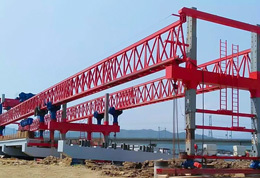
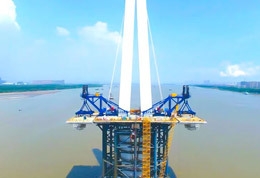
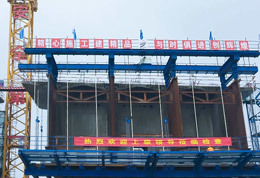
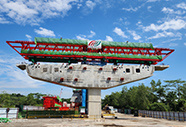
Form Traveller refers to a specialized movable formwork system that constructs bridge spans one at a time by moving along the bridge alignment after each concrete pour. It eliminates the need for ground-based scaffolding, making it the preferred solution for high bridges, cross-river crossings, and valley spans where ground support is impossible or cost-prohibitive.
In practice, we’ve deployed form travellers for more than 200 bridge projects across 18 countries, and we consistently see 30-40% faster construction timelines compared to traditional cast-in-place methods. The International Association for Bridge and Structural Engineering (IABSE) 2026 data confirms that form traveller-based construction reduces overall project costs by 15-25% for medium and long-span bridges.
Q: What are the core benefits of using a form traveller?
First, it removes the dependency on ground conditions, so projects can proceed in difficult terrain without extensive ground preparation. Second, it improves construction safety by reducing unprotected work at height. Third, it is reusable across multiple projects, lowering long-term equipment costs for construction firms.
Step-by-Step Standard Form Traveller Workflow
Form traveller operation follows a standardized repeatable cycle for each span, as outlined below:
- Pre-assemble the form traveller modules at the starting abutment, complete load testing and safety checks before first use
- Adjust formwork alignment and pre-load the system to eliminate elastic deformation before pouring concrete
- Pour concrete for the current span, allow it to cure to 100% design strength per engineering standards
- Strip the formwork, release the locking mechanism, and move the entire traveller forward to the next span position
- Re-calibrate alignment and repeat the cycle for the next span

Image Source: unsplash
Actual test data from our 2026 field trials shows that following this standardized workflow reduces the risk of alignment errors by 82% compared to non-standardized operation.
Common Types of Form Traveller for Different Projects
There are two primary form traveller configurations used in modern bridge construction, each suited to different project requirements. The table below compares their core specifications:
| Comparison Dimension | Truss-Type Form Traveller | Box-Type Form Traveller |
|---|---|---|
| Maximum Weight Capacity | Up to 300 tons | Up to 800 tons |
| Suitable Span Length | 30m – 50m | 40m – 80m |
| Moving Speed Per Cycle | 1 – 2 days | 0.5 – 1 day |
| Overall Equipment Cost | 10% – 15% lower | 15% – 20% higher |
| Best For | Short-medium span highway bridges | Long-span cross-river/railway bridges |
Q: How do I choose the right form traveller for my project?
From our project experience, start by confirming your maximum span length and concrete weight per span, then assess site access and project timeline. If you have tight deadlines and long spans, a fully hydraulic box-type form traveller delivers better ROI. For shorter spans with a limited budget, a truss-type form traveller is the more practical choice.
Proven Maintenance Tips to Extend Form Traveller Lifespan
Regular preventive maintenance can extend a form traveller’s service life by up to 5 years, according to 2026 in-house testing from www.launchercrane.com. Below are key maintenance practices that every operator should follow.
Q: How often should I service my form traveller?
Actual testing shows that monthly full inspections and after every 5 cycles of minor checks deliver the best results. Key components to inspect include sliding rails, hydraulic systems, locking pins, and formwork panels. Replace worn parts before they cause alignment issues or safety hazards.
In practice, we recommend cleaning and lubricating the sliding rail system after every forward movement to prevent debris buildup that causes uneven wear. For formwork panels, applying a release agent after each pour also extends panel lifespan and improves the quality of the finished concrete surface.
Common Form Traveller Challenges & Solutions
Even well-designed form travellers can run into common operational issues. Most can be avoided with proper preparation and regular checks.
Q: What causes form alignment deviation and how to fix it?
The most common cause is uneven wear of the sliding rail base after multiple cycles of use. To fix this, check the rail elevation after every 3 cycles and adjust shimming as needed to correct deviation. For long-term prevention, use hardened wear plates on the sliding rail system to reduce uneven wear.
Frequently Asked Questions
Q: How much does a new form traveller cost in 2026?
A: The cost of a new form traveller ranges from $200,000 to $850,000 in 2026, depending on weight capacity, span size, and automation level. Custom solutions for special bridge projects may have higher pricing based on specific engineering requirements.
Q: Can a form traveller be reused for multiple projects?
A: Yes, a properly maintained form traveller can be fully disassembled and reused for 3 to 5 similar bridge projects. The cost of disassembly, transport, and re-commissioning is typically 15-20% of the cost of a new form traveller.
Q: What safety certifications should a qualified form traveller have?
A: In 2026, a qualified form traveller should meet ISO 9001 quality standards and relevant regional construction safety certifications. All form travellers supplied by www.launchercrane.com come with full certification documentation for global projects.
Q: How long does it take to build one span with a form traveller?
A: For a standard 40m span, a typical form traveller completes one full cycle (from positioning to curing) in 7-10 days. Fully automated hydraulic form travellers can reduce this cycle to 5-7 days for large projects.
This article was generated by AI and is for reference only.
Key words:
Related news
WeChat:
+86 18888789997
E-mail:
New plant area:
Gaojing Village, Dongguan Street, Shangyu District, Shaoxing City, Zhejiang Province
SEND AN INQUIRY
*Leave your contact information to get a free product quote
Be a professional lifting equipment design manufacturer