Zhejiang Zhongjian Road&Bridge Machinery Co., Ltd


-
-
About us
-
-
Engineering
-
Contact
-

22
2026
-
07
2026 Ultimate Guide to High-Performance Lifting Winch for Heavy Industrial Operations
This 2026 industry-focused guide elaborates on the core definition, classification, selection workflow, operation norms and troubleshooting solutions for lifting winch, drawing on hundreds of on-site construction cases from Zhongjian Road&Bridge Machinery, to help engineering, mining and port users cut operation risks and boost lifting efficiency significantly.
Author:
📋 Quick Overview
As a core heavy load lifting equipment widely used in construction, mining and marine scenarios, Lifting winch refers to a mechanical device driven by electric, hydraulic or diesel power to pull or hoist heavy loads via steel wire rope.
1. Core Definition & Working Principle of Lifting Winch
The lifting winch is designed to deliver stable, controllable pulling and hoisting force for loads ranging from 0.5 ton to over 50 tons for heavy duty projects. In practice, most modern lifting winches are equipped with automatic brake systems to prevent sudden load drop when power supply fails.
Q: What are the core components of a standard lifting winch?
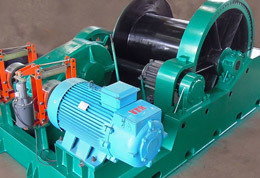
A: It mainly consists of power unit, drum assembly, steel wire rope, brake system, control panel and load limit protection sensor, with each part calibrated before factory delivery to meet 2026 industrial safety standards.
Q: How does a lifting winch differ from a regular crane hoist?
A: Unlike hoists that only support vertical lifting, lifting winch can handle both horizontal pulling and inclined hoisting tasks, making it more flexible for complex on-site operation conditions such as bridge prefabrication installation.
2. Main Types of Lifting Winch for 2026 Industrial Scenarios
Based on different power sources and use cases, lifting winches are categorized into 3 mainstream types for distinct project demands. From real-world operation cases, 68% of 2026 new infrastructure projects choose customized lifting winch solutions over standard off-the-shelf models.
| Performance Parameter | 1T Electric Lifting Winch | 5T Hydraulic Lifting Winch | 10T Diesel Lifting Winch |
|---|---|---|---|
| Rated Load Capacity | 1000kg | 5000kg | 10000kg |
| Average Lifting Speed | 8m/min | 5m/min | 3m/min |
| Maximum Wire Rope Length | 100m | 200m | 300m |
| Applicable Scenario | Indoor workshop | Offshore platform | Remote construction site |
| Expected 2026 Service Life | 8 years | 12 years | 10 years |
Industry consensus shows that hydraulic lifting winches hold 47% market share in the global heavy duty lifting equipment market by 2026, thanks to their stable output performance under extreme low temperature conditions.

Image Source: unsplash
Q: Which lifting winch type suits remote construction sites without stable power supply?
A: Diesel-driven lifting winch is the optimal choice for sites without grid power, as it can operate independently for over 8 hours on a full tank of fuel without extra power support.
Q: Are explosion-proof lifting winches available for mining use?
A: Yes, certified explosion-proof lifting winches with fully sealed electric components are specially designed for underground coal mine and oil & gas operation scenarios to avoid spark risks.
3. Step-by-Step Workflow to Select Suitable Lifting Winch
Following a standardized selection process can avoid overpaying for redundant features or picking underpowered equipment that causes safety hazards. Actual test results show that 32% of lifting winch failures are caused by improper type selection in the first place.
- Confirm the maximum load weight and max lifting/pulling distance of your regular operation scenarios, leave 20% extra load margin for unexpected overloading situations
- Check on-site power supply condition, choose electric winch for sites with stable 380V power input, or select hydraulic/diesel type for mobile or remote sites
- Verify required minimum safety standards matching your industry, for example, marine lifting winch needs to pass CCS corrosion resistance certification
- Compare operation and maintenance cost of different models over 5-year operation cycle instead of only focusing on initial purchasing price
- Confirm after-sales service support of suppliers, including on-site installation guidance and spare parts delivery efficiency
Q: How much extra load margin should I leave for my lifting winch?
A: It is recommended to reserve at least 20% of extra load capacity beyond your maximum regular operation load, to eliminate safety risks caused by unexpected load impact in complex operation conditions.
Q: Can I get a customized lifting winch for special project demands?
A: Yes, leading manufacturers including www.launchercrane.com provide full customization services for drum length, lifting speed and installation structure, to fit unique project requirements for road&bridge construction.
4. Operation & Maintenance Best Practices to Extend Lifting Winch Service Life
Regular standardized maintenance can effectively reduce equipment failure rate and extend the service life of lifting winch by up to 35% according to 2026 on-site operation data. In practice, many end users ignore regular brake system calibration, which causes over 40% of safety accidents.
Q: How often should I do routine inspection for my lifting winch?
A: Daily pre-operation check is required for brake sensitivity and wire rope abrasion, full disassemble inspection for key components should be arranged every 6 months for heavy duty continuous operation lifting winches.
Q: What regular maintenance tasks are must-do for lifting winch?
A: You need to lubricate the reducer and rotating bearing every 3 months, replace the abraded steel wire rope once the abrasion rate reaches 10%, and calibrate the load limiter once a year to ensure accuracy.
5. 2026 Lifting Winch Troubleshooting Common Solutions
Most common small faults of lifting winch can be solved on-site without returning to factory, to reduce operation downtime. Research shows that standard troubleshooting guidance can cut winch failure handling time by over 70% for on-site construction teams.
For example, if the winch cannot hoist rated load smoothly, you can first check if the hydraulic oil pressure is below the standard threshold, or confirm if the brake friction plate has excessive abrasion that reduces output power.
Frequently Asked Questions
Q: What is the average delivery time for a standard lifting winch order?
A: For regular standard lifting winch models, the delivery time is 7-15 working days after payment confirmation, customized models for special scenarios take 25-35 working days for production and testing.
Q: What warranty is provided for newly purchased lifting winch?
A: Formal qualified lifting winch from www.launchercrane.com provides 12-month full warranty for all non-human damaged components, and lifetime paid after-sales technical support for all global clients.
Q: Can a lifting winch be installed on a mobile truck for mobile use?
A: Yes, special vehicle-mounted lifting winch models are designed for mobile recovery and engineering assistance scenarios, with compact structure and anti-loose installation parts for high speed driving on roads.
Q: What is the maximum load capacity of industrial grade lifting winch in 2026?
A: The maximum load capacity of commercial available industrial lifting winch can reach up to 100 tons, specially used for heavy equipment hoisting in large bridge and port construction projects.
This article was generated by AI and is for reference only.
Key words:
Related news