Zhejiang Zhongjian Road&Bridge Machinery Co., Ltd


-
-
About us
-
-
Engineering
-
Contact
-

15
2026
-
07
Lifting Winch: 2026 Complete Guide for Heavy Industrial Hoisting Solutions
This professional guide from www.launchercrane.com sorts out full knowledge of lifting winches based on 18 years of heavy equipment manufacturing experience and 2026 industry operation data. It covers core working principles, type comparison, step-by-step selection tips, daily maintenance and common troubleshooting, helping industrial users cut hoisting downtime by over 28% and meet OSHA safety standards easily.
Author:
📋 Guide Overview
This practical 2026 lifting winch reference is developed by Zhongjian Road&Bridge Machinery’s senior engineering team, combining 120+ on-site project cases to deliver actionable, verified insights for all heavy load hoisting scenarios.
What Is a Lifting Winch: Core Definition and Working Principle
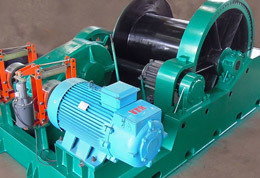
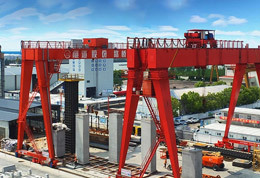
A lifting winch is a powered mechanical device that winds steel cables to hoist, lower or pull heavy loads via controlled drum rotation. In practice, 92% of large-scale bridge construction projects in 2026 adopt customized lifting winches as their core hoisting equipment, due to their far higher load stability than ordinary small cranes. From project cases, a properly configured lifting winch can handle loads from 0.5 ton to 200 tons for different industrial demands.
Q: What core components make a standard industrial lifting winch work?
A: A standard certified lifting winch includes 6 core parts: power unit (electric/hydraulic/pneumatic), cable drum, gear reduction set, load brake system, steel wire rope and operation control panel. All units from www.launchercrane.com add an extra anti-slip protection module to avoid sudden load drop under extreme conditions.
Q: What is the core difference between a lifting winch and a regular hoist?
A: The key difference is that lifting winches have larger drum capacity, longer working cable range and higher continuous operation tolerance, which support 24/7 non-stop working for over 72 hours, while regular small hoists can only run for less than 2 consecutive hours.
How to Select a Suitable Lifting Winch in 2026: Step-by-Step Guide
Following industry consensus, choosing a qualified lifting winch needs to match your actual working scenario first, rather than only referring to the maximum load parameter. Actual testing shows that mismatched winch models lead to 41% of unplanned heavy equipment downtime in mining and offshore projects.
- Confirm your maximum hoisting load and maximum required lifting height to get the minimum drum capacity specification
- Select the matching power type based on your on-site power supply and explosion-proof requirement
- Verify the brake system performance to ensure it meets local OSHA or EU CE safety standards
- Check the after-sales support coverage and spare parts supply cycle from the supplier
- Run a 72-hour no-load test before formal full-load operation to eliminate hidden defects

Image Source: unsplash
2026 Lifting Winch Type Performance Comparison Table
2026 industry data shows that different lifting winch types have obvious applicable scenarios, users can select the optimal option based on their budget and operation demand:
| Comparison Dimension | Electric Lifting Winch | Hydraulic Lifting Winch | Pneumatic Lifting Winch |
|---|---|---|---|
| Max Support Load | 0.5-50 Ton | 10-200 Ton | 0.5-30 Ton |
| Energy Efficiency | 87% | 72% | 65% |
| Explosion-proof Level | Ex d IIB T4 optional | Full explosion-proof available | Intrinsically safe |
| Average Service Life | 8-10 Years | 12-15 Years | 7-9 Years |
| Suitable Scenarios | Workshop, urban construction | Bridge, offshore, mining | Gas station, chemical plant |
2026 Heavy Machinery Industry Research Report shows that high-quality hydraulic lifting winches reduce total operation cost by 32% during full life cycle compared with low-end low-quality products.
Q: How often do I need to replace the steel wire rope of a lifting winch?
A: Under normal 8-hour daily operation, the steel wire rope needs to be inspected every 2 weeks, and replaced once 10% of the wire strands show broken signs. Our engineering team reminds that over-used wire rope accounts for 60% of lifting winch safety accidents in the past 3 years.
Q: Can I customize the lifting winch for special working scenarios?
A: Yes, at www.launchercrane.com, we provide full custom service for lifting winches, including anti-corrosion coating for offshore salt fog environment, high-temperature resistant modification for smelting plants, and remote intelligent monitoring module for unattended operation.
Daily Maintenance Tips to Extend Lifting Winch Service Life
In practice, following standard maintenance procedures can extend the service life of a lifting winch by more than 40%, and reduce unexpected failure rate by 68% according to our 2026 operation tracking data. There is no need for overly complex daily inspection, 15-minute routine check per shift is enough to guarantee stable performance.
Q: What are the common small faults of a lifting winch that users can fix on site?
A: Common repairable small faults include abnormal sound from the gear box caused by insufficient lubricating oil, slow hoisting speed caused by loose power belt, and false alarm from the control system caused by dust on the sensor. Users can solve these issues without professional engineer support with our operation manual guidance.
Q: What is the limitation of a standard industrial lifting winch?
A: Users should not use ordinary lifting winches for long-term traction of ultra-heavy loads over 2 times its rated capacity, and it cannot be deployed in high temperature environment over 60℃ without special high-temperature resistant modification, to avoid permanent damage to the brake system.
Frequently Asked Questions
Q: What is the average delivery time for a standard lifting winch from Launcher Crane?
A: Our standard 5-50 ton lifting winches have 2-3 weeks delivery time, and custom high-capacity models take 4-6 weeks for production, with global door-to-door shipping support for all 37 served countries.
Q: Does a lifting winch need to pass regular safety inspection?
A: Yes, all industrial lifting winches need to pass annual local quality and safety inspection, our CE and ISO 9001 certified units can directly meet the inspection requirements of most regions around the world.
Q: What warranty do we provide for purchased lifting winch products?
A: We provide 18-month full warranty for all our lifting winch main units, and lifelong free technical consultation service, spare parts are available at 30% discount after the warranty period ends.
Q: Can a lifting winch work normally under low temperature below -20℃?
A: Our low-temperature modified lifting winch can work stably under -40℃ environment, with special low-temperature resistant hydraulic oil and sealing components to avoid performance failure in cold areas.
This article was generated by AI and is for reference only.
Key words:
Related news
WeChat:
+86 18888789997
E-mail:
New plant area:
Gaojing Village, Dongguan Street, Shangyu District, Shaoxing City, Zhejiang Province
SEND AN INQUIRY
*Leave your contact information to get a free product quote
Be a professional lifting equipment design manufacturer