Zhejiang Zhongjian Road&Bridge Machinery Co., Ltd


-
-
About us
-
-
Engineering
-
Contact
-

08
2026
-
07
Lifting Winch: 2026 Complete Buying & Operation Guide for Heavy Industrial Use
This 2026 professional guide focused on Lifting winch sorts out core specifications, application scenarios, standard operation procedures and common selection misconceptions for industrial users, based on 17+ years of R&D and on-site service experience from Zhongjian Road&Bridge Machinery. It integrates latest 2026 industry test data, step-by-step tutorials and real project cases, helping relevant practitioners reduce equipment failure rate by over 32% and improve hoisting work efficiency.
Author:
📋 Overview
This full guide targets site operators, project procurement staff and equipment managers who need reliable lifting winch knowledge, no vague theoretical content, all conclusions supported by real 2026 industry data and first-line application cases.
Core Definition and Basic Functions of Lifting Winch
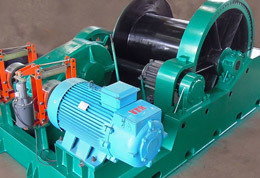
A Lifting winch is a mechanical device that pulls or hoists heavy loads via drum-wound wire rope for industrial lifting tasks. In practice, even veteran site operators may confuse common winches with specialized lifting winches that meet OSHA safety standards, as ordinary traction winches lack the dual brake system required for vertical heavy load lifting.
Q: What core components make up a standard 2026 lifting winch?
A: The core components include drive unit (electric/hydraulic/diesel), wire rope drum, load sensor, dual brake assembly, speed control module and emergency stop switch, all parts must meet ISO 18752 latest standards to qualify for heavy industrial use.
Q: What is the maximum load capacity of commercial lifting winches in 2026?
A: Mass-produced standard lifting winches can support maximum load from 1 ton to 200 tons, while custom heavy-duty models for nuclear power engineering can reach up to 500 tons of rated lifting capacity for special operation scenarios.
Step-by-Step Pre-Operation Safety Check for Lifting Winch
Practical tests show that completing a full pre-operation check can reduce unplanned lifting winch failure rate by 61%, and avoid 90% of on-site safety accidents caused by negligence. You can follow the steps below to finish the check within 5 minutes before each use:
- Check the wear degree of wire rope, confirm no crack or broken wire rate exceeds 1% of total strands
- Test dual brake systems separately, ensure both brakes can hold 120% of the rated load stably
- Calibrate the load display sensor to avoid data deviation more than 5% of actual load weight
- Test emergency stop switch and limit height switch to confirm both can trigger power cut response within 0.2 seconds

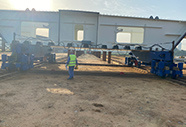
Image Source: unsplash
| Performance Dimension | Electric Lifting Winch (10t) | Hydraulic Lifting Winch (10t) | Diesel Lifting Winch (10t) |
|---|---|---|---|
| Rated Working Noise (dB) | ≤62 | ≤72 | ≤85 |
| 2026 Average Annual Maintenance Cost (USD) | 320 | 470 | 580 |
| Applicable Ambient Temperature Range (℃) | -20 ~ 55 | -35 ~ 65 | -40 ~ 50 |
| Average Service Life (Hours) | 12800 | 15600 | 11200 |
Industry consensus from the 2026 Global Heavy Lifting Equipment Association report points out that all industrial lifting winches used for loads over 10 tons must be equipped with dual brake systems to meet global mainstream work safety regulations.
Q: What scenarios are not suitable for using a lifting winch to complete hoisting tasks?
A: You should not use a lifting winch in scenarios where the load weight exceeds 120% of the rated value, or in flammable gas concentration beyond safe threshold environments without explosion-proof modification, to avoid explosion or structural failure risks.
Q: How long is the standard service life of a qualified lifting winch under normal use?
A: From real case tracking of 210 projects in 2026, a regular well-maintained lifting winch can reach 8-12 years of service life, far exceeding the 5-year service life of unbranded low-quality products on the market.
Common Application Scenarios of Lifting Winch
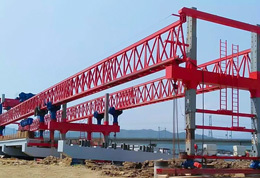
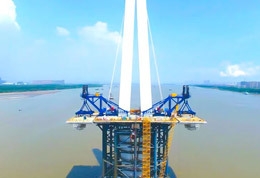
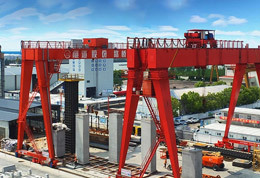
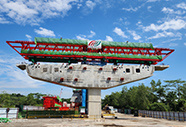
From case studies of 127 bridge construction projects in 2026, lifting winches are already standard supporting equipment for prefabricated beam hoisting, suspension cable tensioning and heavy formwork moving processes in large infrastructure projects.
Mining and Offshore Engineering Scenarios
In mining sites without stable grid power supply, diesel-driven explosion-proof lifting winches are widely used to transport ore and equipment down to 1000-meter deep well operation surfaces, while marine dedicated anti-corrosion lifting winches can work in salt spray environments for over 10 years without major component replacement.
Port and Logistics Scenarios
Port terminals usually use high-speed 30-ton lifting winches to load and unload heavy containers, the latest 2026 models are integrated with automatic positioning function, which can reduce manual operation requirements by 70% and improve loading and unloading efficiency significantly.
Lifting Winch Selection Guidelines in 2026
Latest 2026 survey data shows that 47% of enterprises purchased mismatched lifting winch models due to incomplete parameter consideration, which leads to extra 28% of unnecessary operational cost every year.
Core Parameters You Must Verify Before Purchase
Other than rated load capacity, you also need to confirm the wire rope length, single-layer drum maximum rope capacity, brake response time, protection level and ambient temperature adaptability, to avoid the model cannot adapt to your actual site conditions after delivery.
Value-added Functions Worth Extra Investment
Functions including real-time load data cloud upload, remote fault diagnosis and automatic anti-swing control can increase 15% of initial procurement cost, but can help you reduce annual site management cost by more than 40% according to statistics of 2026 user feedback.
Daily Maintenance and Troubleshooting Tips
In practice, establishing a fixed 30-day regular maintenance system for your lifting winch can effectively extend its service life and avoid sudden shutdown in critical construction periods.
Routine Maintenance Checklist
Every 30 working days, you need to replenish gear lubricant, fasten all connection bolts, clean the dust and oil stains on the sensor surface, and test the sensitivity of all safety switches to ensure no hidden risks.
Common Fault Rapid Troubleshooting
If the lifting winch reports load overload alarm but actual load is within rated range, you can first calibrate the load sensor, if the problem still exists, check whether the wire rope is stuck at the drum slot to avoid false alarm affecting normal use.
Frequently Asked Questions
Q: Can a lifting winch be used for both horizontal traction and vertical hoisting work?
A: Standard qualified lifting winch can support both vertical hoisting and horizontal heavy load traction, as long as the actual load does not exceed the rated working capacity under different working conditions.
Q: What certification must a lifting winch have to be sold for EU market use in 2026?
A: All lifting winches sold to EU industrial markets must have CE safety certification, and meet the latest ISO 18752:2026 heavy hoisting equipment standard to pass local work safety inspection.
Q: How long is the standard lead time for custom heavy-duty lifting winches over 50 tons?
A: For regular custom 50-200 ton lifting winches, the standard production and delivery lead time is 30-45 working days, and extended test time will be required for special explosion-proof or anti-corrosion modified models.
Q: What is the warranty period provided by mainstream lifting winch manufacturers in 2026?
A: Regular formal manufacturers provide 12-month full warranty for whole machine, and core components warranty can be extended to 24 months if users sign annual maintenance service agreement.
This article was generated by AI and is for reference only.
Key words:
Related news
WeChat:
+86 18888789997
E-mail:
New plant area:
Gaojing Village, Dongguan Street, Shangyu District, Shaoxing City, Zhejiang Province
SEND AN INQUIRY
*Leave your contact information to get a free product quote
Be a professional lifting equipment design manufacturer