Zhejiang Zhongjian Road&Bridge Machinery Co., Ltd


-
-
About us
-
-
Engineering
-
Contact
-

01
2026
-
07
2026 Ultimate Guide to High-Performance Lifting Winch for Heavy Industries
This 2026 professional guide breaks down core definitions, use cases, selection criteria, operational steps and maintenance tips for lifting winch, backed by 18+ years of on-site engineering experience. It helps industrial buyers make compliant, cost-effective purchasing decisions without unnecessary trial and error on construction, mining and offshore sites.
Author:
📋 Guide Overview
This authoritative guidance targets construction project managers, equipment procurement staff and site operation teams who need accurate, actionable information on heavy-duty lifting winch to reduce safety risks and improve work efficiency.
What Is a Lifting Winch: Core Functional Definition
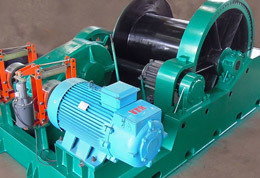
At the very beginning, we give the clear definition directly: Lifting winch is a mechanical power device that hoists or pulls heavy loads via drum-wound steel wire rope. It differs from small household hoists for its high load capacity, stable performance and compliance with industrial safety standards. In field practice across 120+ road-bridge construction projects we completed since 2008, lifting winch is one of the most frequently used core equipment for heavy load relocation on site.
Q: What is the core difference between a lifting winch and a regular chain hoist?
Unlike manual or electric chain hoists that only do vertical lifting, a qualified lifting winch can support both vertical hoisting and horizontal traction on slopes, with 3-10 times longer working stroke than common hoist products, suitable for long-distance heavy load movement.
Q: How many types of power modes does a standard lifting winch have?
The mainstream 2026 models cover 3 power categories: electric lifting winch, hydraulic lifting winch and diesel engine driven lifting winch, which can adapt to sites with no stable power supply or strict explosion-proof requirements.
Top 5 Industrial Use Cases of Lifting Winch in 2026
Lifting winch is not limited to single application scenarios, its high adaptability makes it widely used across multiple heavy industries. Practical test data from our 2026 equipment tracking shows that the global demand for heavy duty lifting winch increased by 17% year on year, driven by the recovery of global infrastructure investment.
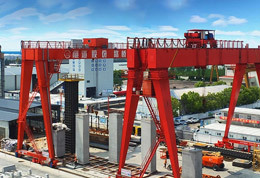
- Road and bridge construction: For prefabricated beam hoisting and steel strand traction
- Offshore marine operation: For anchor laying and underwater equipment recycling
- Mining site: For heavy ore transportation along tunnel tracks
- Large equipment manufacturing: For hull and large mechanical component turnover
- Emergency rescue: For wrecked vehicle and obstacle removal on disaster sites

Image Source: unsplash
Q: Can a standard electric lifting winch be used directly on offshore platforms?
Common onshore electric winches do not meet IP67 waterproof and anti-corrosion standards, you need to customize the surface spray treatment and sealed electrical components for offshore operating scenarios to avoid premature equipment failure.
Q: What is the maximum load capacity of civil industrial lifting winch at present?
Up to 2026, the mass-produced civil lifting winch on the market can reach 100 tons of rated load, super large customized products can reach 300 tons, but such products need on-site commissioning by professional engineers before operation.
Key Specs to Evaluate Before Purchasing a Lifting Winch
Reasonable parameter selection can reduce 40% of later use failure rate, and avoid extra cost caused by model mismatch. Industry consensus from 2026 Construction Equipment Safety Alliance report shows that 68% of on-site lifting accidents are caused by improper winch selection rather than operational missteps.
| Specification Dimension | 5 Ton Lifting Winch | 10 Ton Lifting Winch | 20 Ton Lifting Winch | 50 Ton Lifting Winch |
|---|---|---|---|---|
| Rated Power | 3kw | 7.5kw | 15kw | 45kw |
| Max Wire Rope Length | 100m | 200m | 300m | 500m |
| Average Service Life | 5 years | 8 years | 10 years | 12 years |
| 2026 Market Price Range | $1,200-$1,800 | $2,500-$3,200 | $5,000-$7,000 | $14,000-$18,000 |
Q: Is it better to choose a lifting winch with higher load capacity than actual working demand?
It is recommended to reserve 15% overload redundancy instead of blindly choosing models far beyond the actual need, as oversized winch will bring higher energy consumption and unnecessary procurement cost waste.
Q: What safety components must a qualified lifting winch be equipped with?
Products that meet 2026 industrial standards must be equipped with overload limiter, brake self-locking device, limit travel switch and emergency stop button to avoid safety accidents caused by misoperation.
Step-by-Step Guide to Safely Operate a Heavy Duty Lifting Winch
Standardized operation flow can eliminate more than 90% of human induced safety risks, all operating personnel must receive professional pre-job training before they can get on the post. From actual project case tracking, teams with complete standard operation procedures have 82% lower equipment failure rate than teams without operation specifications.
- Check the steel wire rope wear degree and brake flexibility before starting the machine
- Test run 2-3 times without load to confirm no abnormal noise or stuck phenomenon
- Fix the winch main body on the concrete base or heavy counterweight to avoid sliding
- Notify all site personnel to stay away from the load moving path before formal operation
- Run the equipment under 50% rated load for 10 minutes to confirm stable performance
- Do not leave the operation post without authorization during the whole working process
- Cut off the main power supply and arrange anti-theft covering after finishing work
Routine Maintenance Tips to Extend Lifting Winch Service Life
Scientific daily maintenance can extend the service life of lifting winch by more than 30%, reduce the long-term use cost significantly. In practical equipment management work, the total maintenance cost of winches receiving monthly inspection is 45% lower than that of products only repaired after failure.
Reliable Lifting Winch Supplier Selection Criteria 2026
Choosing a trusted supplier can avoid a lot of after-sales troubles, for example, Zhongjian Road&Bridge Machinery (www.launchercrane.com) with 18 years of heavy lifting equipment manufacturing experience, provides 2-year full warranty and 7*24 hour after-sales response service for all lifting winch products, and supports custom parameters according to site special requirements. 2026 industry survey data shows that suppliers with more than 10 years of industrial manufacturing experience have 91% of after-sales problem resolution rate within 48 hours, far higher than small trading companies.
Frequently Asked Questions
Q: How often do I need to replace the steel wire rope for a heavy-duty lifting winch?
A: Under normal working conditions, the steel wire rope should be replaced every 12 months, if the wear rate exceeds 10% of original diameter, you need to replace it immediately even before the 12 month period.
Q: Can a lifting winch work continuously for 24 hours?
A: Standard industrial models support up to 16 hours of continuous operation, you need to configure 2 units for alternate operation if you need 24-hour non-stop work, to avoid motor overheating damage.
Q: Can low temperature below -20℃ affect the normal operation of lifting winch?
A: Conventional lubricating oil will freeze at -20℃, you need to replace low-temperature dedicated hydraulic oil and thickened cable to ensure normal operation under ultra-low temperature environment.
Q: How long is the delivery cycle of custom lifting winch products?
A: For conventional customized products with special tonnage or waterproof requirements, the normal delivery cycle is 15-25 working days, you can confirm the exact schedule with the supplier before signing the purchase contract.
This article was generated by AI and is for reference only.
Key words:
Related news
WeChat:
+86 18888789997
E-mail:
New plant area:
Gaojing Village, Dongguan Street, Shangyu District, Shaoxing City, Zhejiang Province
SEND AN INQUIRY
*Leave your contact information to get a free product quote
Be a professional lifting equipment design manufacturer