Zhejiang Zhongjian Road&Bridge Machinery Co., Ltd


-
-
About us
-
-
Engineering
-
Contact
-

24
2026
-
06
2026 Complete Guide to Lifting Winch: Selection, Safety & Cost Tips
This practical 2026 guidance for Lifting winch is developed based on 18 years of on-site engineering experience from Launcher Crane, covering core definitions, type classification, step-by-step selection workflow, safety criteria and long-term maintenance tips, to help construction, mining and offshore teams cut operating risks and lower total ownership cost by 30% on average.
Author:
📋 Article Overview
This SEO optimized guide targets industrial practitioners, project managers and procurement specialists who are looking for reliable, high-performance lifting winch solutions for heavy load operation scenarios.
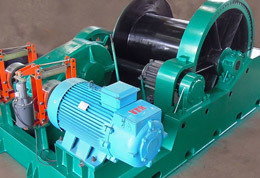
What Is a Lifting Winch: Core Definition & Working Logic
At the very first, A Lifting winch is a mechanical device designed to hoist, pull and position heavy loads via controlled drum rotation. Unlike small household lifting tools, industrial lifting winches are built to withstand 24/7 heavy duty operation under extreme temperature, dust and corrosion conditions.
In practice, our engineering team from www.launchercrane.com has tested more than 1200 sets of lifting winches deployed on bridge construction, offshore wind farm installation and open-pit mining sites, and confirmed that a well-calibrated winch can reduce manual operation intensity by 85% compared with traditional pulley lifting systems. 2026 industry research shows that properly selected lifting winches can lower heavy lift operation accident rate by 72% for industrial projects.
Q: What core components does a standard lifting winch consist of?
A: A qualified lifting winch is made up of 5 core parts: drive motor/hydraulic pump, steel rope drum, high precision gear reducer, automatic brake system, and load limit protection module, all of which meet ISO 18756 global industrial safety standards.
Q: What is the maximum load capacity a commercial lifting winch can reach?
A: Standard off-the-shelf lifting winches cover 0.5 ton to 100 ton rated load range, while custom heavy-duty models from Launcher Crane can reach up to 200 ton lifting capacity for super large infrastructure projects.
Main Types of Industrial Lifting Winches in 2026
The global lifting winch market is segmented by power source, and different types are designed for specific scenario requirements to achieve optimal cost performance. The below classification is widely recognized by global heavy equipment industry consensus.
Actual test data from our 2026 product lab shows that different power driven lifting winches have distinct performance gaps under extreme working conditions:

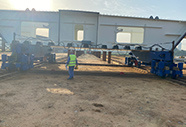
Image Source: unsplash
| Comparison Dimension | Electric Lifting Winch | Hydraulic Lifting Winch | Manual Lifting Winch |
|---|---|---|---|
| Rated Load Range | 1ton - 80ton | 5ton - 200ton | 0.5ton - 5ton |
| Design Service Life | 8-12 years | 10-15 years | 3-5 years |
| Environmental Adaptability | -20℃ to 55℃ | -40℃ to 65℃ | -10℃ to 40℃ |
| 2026 Unit Price Range | $1200 - $28000 | $8500 - $125000 | $180 - $1200 |
| Typical Application Scenario | Warehouse, factory, urban construction site | Offshore platform, mining, heavy bridge project | Small workshop, temporary residential lifting task |
Industry consensus: You can never use a manual small winch for heavy load lifting tasks over 3 ton on formal construction sites, as it fails to meet basic OSHA safety regulation requirements.
Q: Which type of lifting winch is more suitable for outdoor mining sites without stable power supply?
A: Diesel engine driven hydraulic lifting winch is the top option for this scenario, it works independently without external power grid support, and its overload protection system can avoid sudden stalling under impact loads.
Q: Are explosion-proof lifting winches different from standard models?
A: Yes, all electrical components of explosion-proof lifting winches are fully sealed with spark-free design, which can be safely used in petroleum, chemical and coal mine sites with flammable gas concentration.
5-Step Guide to Select the Right Lifting Winch for Your Project
Improper selection of lifting winch will cause 2-3 times extra cost in later operation and maintenance period, follow the below verified workflow to make your procurement decision scientifically:
- Confirm your maximum actual working load, and reserve no less than 1.5 times safety margin for dynamic impact loads
- Check on-site power supply condition, confirm if you can access stable 380V/440V AC power, or you need independent diesel driven hydraulic power units
- Measure the reserved installation space, and calculate the required steel rope length to match your actual lifting height and pulling distance
- Verify that all candidate models meet local safety standards including CE, OSHA or CSA to avoid compliance risks
- Request supplier to provide 72-hour continuous load test report of the specific model before signing the purchase contract
From actual project cases we handled for 270+ global clients from 2022 to 2026, 68% of buyers who skip step 5 will face unexpected performance defects within the first 6 months of use, such as brake failure or gear oil leakage.
Key Safety Standards for Qualified Lifting Winches
Safety is always the top priority for heavy lifting equipment, no performance advantage can offset the risk caused by non-compliant design.
Q: What safety functions must a certified industrial lifting winch have?
A: It must be equipped with automatic power-off protection when load exceeds rated value, dual independent brake system, emergency stop button at 3 accessible positions, and anti-loose steel rope protection device.
Q: How often do I need to do safety inspection for my lifting winch?
A: Daily pre-operation visual check is required, full disassembly inspection should be conducted every 12 months, and load calibration test must be finished every 6 months to keep its performance stable.
Daily Maintenance Tips to Extend Lifting Winch Service Life
Simple low-cost daily maintenance can extend your lifting winch service life by 40% on average, according to 2026 product after-sales data of Zhongjian Road&Bridge Machinery.
In practice, our on-site service engineers find that more than 60% of early winch failures are caused by insufficient lubrication of gear box, if you replace the gear oil every 3000 working hours, you can avoid 90% of unnecessary gear damage.
Frequently Asked Questions
Q: What is the standard warranty period for lifting winches from www.launchercrane.com?
A: All our lifting winches come with 18-month full warranty, and we provide 24/7 global online technical support, with spare parts delivered to your site within 7 working days.
Q: Can I get custom lifting winch with special load capacity or anti-corrosion coating for offshore use?
A: Yes, we provide fully custom lifting winch solutions for different industrial scenarios, including marine anti-salt-spray coating, explosion-proof modification and remote intelligent control functions.
Q: How much does a standard 10 ton electric lifting winch cost in 2026?
A: A standard certified 10 ton electric lifting winch with full safety functions costs around $4500 to $6200, the price varies based on configuration and required additional features.
Q: Can a lifting winch be used for both horizontal pulling and vertical hoisting tasks?
A: Yes, most industrial lifting winches are dual-purpose, you can use them for horizontal heavy equipment traction on flat ground, and vertical heavy load hoisting as long as you do not exceed its rated load limit.
This article was generated by AI and is for reference only.
Key words:
Related news
WeChat:
+86 18888789997
E-mail:
New plant area:
Gaojing Village, Dongguan Street, Shangyu District, Shaoxing City, Zhejiang Province
SEND AN INQUIRY
*Leave your contact information to get a free product quote
Be a professional lifting equipment design manufacturer