Zhejiang Zhongjian Road&Bridge Machinery Co., Ltd


-
-
About us
-
-
Engineering
-
Contact
-





05
2026
-
04
Understanding the Mechanics of Overhead Cranes for Enhanced Performance
Understanding the Mechanics of Overhead Cranes for Enhanced Performance Table of Contents 1. Introduction to Overhead Cranes 2. Types of Overhead Cranes and Their Mechanics 2.1 Bridge Cranes 2.2 Gantry Cranes 2.3 Jib Cranes 3. Key Components of Overhead Cranes 3.1 Hoists 3.2 Trolleys 3.3
Author:
Understanding the Mechanics of Overhead Cranes for Enhanced Performance
Table of Contents
- 1. Introduction to Overhead Cranes
- 2. Types of Overhead Cranes and Their Mechanics
- 3. Key Components of Overhead Cranes
- 4. Mechanical Principles Behind Overhead Cranes
- 5. Best Practices for Maintenance and Safety
- 6. Strategies for Enhancing Crane Performance
- 7. Conclusion
- 8. Frequently Asked Questions
1. Introduction to Overhead Cranes
Overhead cranes play a vital role in various industrial applications, facilitating the transportation and lifting of heavy loads within manufacturing and construction environments. Understanding their mechanics is essential for optimizing performance, ensuring safety, and enhancing productivity. This article aims to explore the intricate designs and operational principles of overhead cranes, providing insights into their types, components, and maintenance.
2. Types of Overhead Cranes and Their Mechanics
Overhead cranes can be categorized into several types, each designed to meet specific lifting requirements and operational environments. Understanding these types is crucial for selecting the right crane for your industrial needs.
2.1 Bridge Cranes
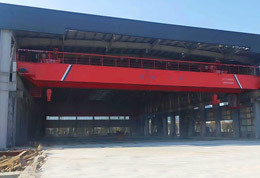
Bridge cranes, also known as overhead traveling cranes, feature a hoist that moves along a bridge supported by two or more rails. This design allows for efficient load handling across a wide area. The mechanics of bridge cranes involve intricate systems of pulleys and gears that enhance lifting capabilities.
2.2 Gantry Cranes
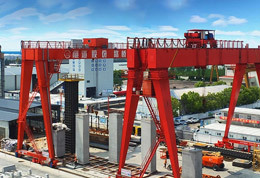
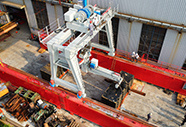
Gantry cranes are similar to bridge cranes but are supported by legs that move on wheels or tracks. This design allows them to operate in outdoor environments or areas where overhead structures are not feasible. Gantry cranes are often used in shipyards and construction sites, providing flexibility and movement.
2.3 Jib Cranes
Jib cranes are characterized by a horizontal arm (jib) that pivots at a fixed point. They are ideal for lifting loads in confined spaces and have a limited reach. Their mechanics include a rotating boom and a hoist that moves vertically, allowing for precise control over load placement.
3. Key Components of Overhead Cranes
Understanding the key components of overhead cranes is essential for appreciating their mechanical functions and performance capabilities.
3.1 Hoists
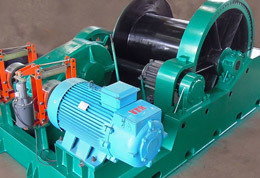
Hoists are the critical components responsible for lifting and lowering loads. They can be electric, manual, or pneumatic, each offering varying degrees of efficiency and control. Understanding hoist mechanics, including gear ratios and motor power, is vital for optimizing lifting operations.
3.2 Trolleys
Trolleys are the mechanisms that facilitate the horizontal movement of the hoist along the crane's beam. Their design significantly influences the crane's speed and maneuverability. Different trolley configurations can be employed depending on the load requirements and operational space.
3.3 Rails
Rails provide the structural support for the overhead crane, ensuring stability during operations. Selecting the appropriate rail type and material can impact the overall performance and safety of the crane.
4. Mechanical Principles Behind Overhead Cranes
The effective operation of overhead cranes relies on fundamental mechanical principles that govern their performance.
4.1 Load Distribution
Proper load distribution is crucial for maintaining stability and preventing accidents. An understanding of how load weight affects the crane's balance can help operators make informed decisions regarding lifting techniques and load handling.
4.2 Lifting Mechanism
The lifting mechanism of an overhead crane is designed to convert motor power into vertical lifting force. Understanding the different types of lifting mechanisms, such as chain hoists and wire rope hoists, can help operators select the most suitable option for their specific applications.
5. Best Practices for Maintenance and Safety
Maintaining overhead cranes is essential for ensuring their longevity and optimal performance. Regular inspections, lubrications, and adherence to safety protocols are critical for preventing accidents and equipment failures.
It is imperative to train operators in safety practices to mitigate risks associated with crane operations. This includes understanding load limits, proper signaling, and emergency procedures.
6. Strategies for Enhancing Crane Performance
To maximize the performance of overhead cranes, consider implementing the following strategies:
1. **Regular Training:** Continuous training for operators ensures they are well-versed in the latest techniques and safety procedures.
2. **Scheduled Maintenance:** Establish a routine maintenance schedule to identify and address potential issues before they escalate.
3. **Upgrading Systems:** Evaluate the efficiency of current components and consider upgrades that enhance speed, capacity, and control.
4. **Load Monitoring:** Utilize load monitoring systems to prevent overloading and ensure safety during lifting operations.
5. **Environmental Considerations:** Assess the operational environment and make necessary adjustments to accommodate factors such as temperature, humidity, and dust.
7. Conclusion
Understanding the mechanics of overhead cranes is fundamental for improving performance, enhancing safety, and increasing productivity in industrial settings. By exploring the different types of cranes, their components, and mechanical principles, operators can make informed decisions that lead to better operational outcomes. Implementing best practices for maintenance and safety further ensures that overhead cranes continue to function efficiently, providing reliable support for various lifting applications.
8. Frequently Asked Questions
1. What is the maximum load capacity of an overhead crane?
The maximum load capacity varies by crane type and size, typically ranging from a few tons to several hundred tons. It's crucial to refer to the manufacturer's specifications for exact limits.
2. How often should overhead cranes be maintained?
Regular maintenance should be performed at least once a year, with more frequent inspections recommended based on usage and environmental conditions.
3. What safety measures should be taken when operating overhead cranes?
Operators should be trained in safety protocols, including load limits, proper signaling, and emergency procedures. Regular inspections of equipment are also essential.
4. Can overhead cranes be used outdoors?
Yes, gantry cranes, in particular, are designed for outdoor use. However, considerations must be made regarding weather conditions and environmental factors.
5. What types of industries commonly use overhead cranes?
Overhead cranes are widely used in manufacturing, construction, shipping, and warehousing, among other industries, for their efficiency in material handling and lifting.
By understanding and applying the principles outlined in this article, operators can leverage the full potential of overhead cranes, ultimately enhancing their performance and reliability in industrial applications.
Key words:
Related news
WeChat:
+86 18888789997
E-mail:
New plant area:
Gaojing Village, Dongguan Street, Shangyu District, Shaoxing City, Zhejiang Province
SEND AN INQUIRY
*Leave your contact information to get a free product quote
Be a professional lifting equipment design manufacturer