Zhejiang Zhongjian Road&Bridge Machinery Co., Ltd


-
-
About us
-
-
Engineering
-
Contact
-





08
2026
-
01
Innovative Applications of Gantry Cranes Across Industries: Transforming Material Handling Solutions
Innovative Applications of Gantry Cranes Across Industries Table of Contents 1. Introduction to Gantry Cranes 2. What is a Gantry Crane? 3. Historical Evolution of Gantry Cranes 4. Typical Applications of Gantry Cranes 5. Innovative Uses in the Manufacturing Industry 6. Transforming the Construction Industry 7. Enhancing Logistics and Warehousing Oper
Author:
Innovative Applications of Gantry Cranes Across Industries
Table of Contents
- 1. Introduction to Gantry Cranes
- 2. What is a Gantry Crane?
- 3. Historical Evolution of Gantry Cranes
- 4. Typical Applications of Gantry Cranes
- 5. Innovative Uses in the Manufacturing Industry
- 6. Transforming the Construction Industry
- 7. Enhancing Logistics and Warehousing Operations
- 8. Future Trends in Gantry Crane Technology
- 9. Frequently Asked Questions
- 10. Conclusion
1. Introduction to Gantry Cranes
Gantry cranes have become indispensable tools in various sectors, offering unmatched versatility and efficiency in material handling. These cranes are characterized by their overhead structure that straddles a workspace, allowing them to lift, move, and position heavy loads with precision. As industries evolve and demand for innovative solutions grows, gantry cranes are rapidly adapting to meet these challenges.
2. What is a Gantry Crane?
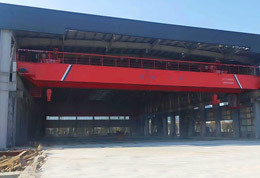
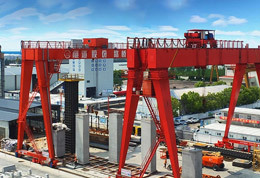
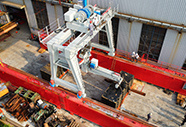
A gantry crane consists of a frame that supports a hoist, which moves along the frame's length. Typically constructed from robust steel, gantry cranes are designed for durability and strength, making them suitable for heavy lifting. They can be either fixed or mobile, allowing for flexibility in operation. Their design enables efficient use of vertical space, making them ideal for warehouses, factories, and construction sites.
Key Components of Gantry Cranes
- **Girder**: The main horizontal beam that supports the hoist.
- **Legs**: Vertical supports that stabilize the crane and allow for movement.
- **Hoist**: The lifting mechanism that raises and lowers loads.
- **Trolley**: A wheeled platform that moves the hoist along the girder.
- **Controls**: Systems that enable operators to maneuver the crane and manage loads.
3. Historical Evolution of Gantry Cranes
The use of cranes dates back to ancient times, with the first documented crane being used in Greece around 500 B.C. However, the gantry crane as we know it today began to take shape during the Industrial Revolution in the 19th century. Initially, these cranes were constructed from wood and powered by manual labor or steam engines. Over the years, advancements in materials and technology have transformed gantry cranes into high-tech machines equipped with electric systems and advanced control technologies.
4. Typical Applications of Gantry Cranes
Gantry cranes are employed across a wide range of applications, including but not limited to:
- **Material handling** in warehouses.
- **Heavy lifting** in manufacturing plants.
- **Construction tasks**, such as moving steel beams.
- **Shipping and logistics** for loading and unloading containers.
- **Maintenance tasks** in shipyards and aerospace facilities.
5. Innovative Uses in the Manufacturing Industry
In the manufacturing sector, gantry cranes are integral to enhancing productivity and safety. They are widely used for assembly lines where heavy components need to be lifted and positioned accurately. **Innovative applications** include the automation of hoisting tasks, where cranes are integrated with robotic systems to streamline operations. This synergy not only reduces manual labor but also minimizes the risk of injury.
Case Study: Automotive Manufacturing
In automotive manufacturing, gantry cranes facilitate the assembly of large vehicle components. For example, a manufacturer may employ a gantry crane to lift an engine block, allowing workers to focus on precision assembly rather than struggling with the weight. This innovation contributes to faster production cycles and improved quality control.
6. Transforming the Construction Industry
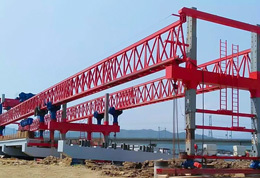
The construction industry has embraced gantry cranes due to their ability to lift and transport heavy materials in tight spaces. Used primarily for erecting structures, gantry cranes can navigate complex job sites with ease. **Their adaptability** makes them suitable for various tasks, from moving precast concrete panels to lifting steel girders.
Innovative Designs for Unique Projects
Recent developments in gantry crane design have led to models that can adapt to specific project requirements. For instance, modular gantry cranes can be reconfigured based on the construction site, enabling contractors to tackle diverse challenges efficiently.
7. Enhancing Logistics and Warehousing Operations
Gantry cranes are revolutionizing logistics and warehousing by optimizing space and increasing throughput. In environments where efficiency is critical, these cranes enable rapid loading and unloading of goods. Their design allows for the manipulation of loads in confined spaces, making them ideal for modern warehouses.
Automation and Integration with Warehouse Management Systems
The integration of gantry cranes with warehouse management systems (WMS) has taken material handling to new heights. Automated gantry cranes can now work alongside inventory management systems to track and manage stock levels in real-time, significantly improving operational efficiency.
8. Future Trends in Gantry Crane Technology
As industries strive for greater efficiency and sustainability, the future of gantry cranes looks promising. Key trends include:
- **Smart technology integration**: Utilizing IoT devices for monitoring and predictive maintenance.
- **Energy-efficient systems**: Developing cranes that consume less power while maintaining performance.
- **Advanced safety features**: Implementing technology to enhance operator safety and reduce accidents.
Impact of AI on Gantry Crane Operations
Artificial Intelligence (AI) is set to play a pivotal role in the future of gantry cranes. By analyzing operational data, AI can optimize load management, predict maintenance needs, and enhance decision-making processes.
9. Frequently Asked Questions
1. What industries commonly use gantry cranes?
Gantry cranes are widely used in manufacturing, construction, logistics, and warehousing sectors, among others.
2. How do gantry cranes improve safety?
By automating heavy lifting and providing better load management, gantry cranes reduce the risk of workplace injuries and accidents.
3. Can gantry cranes be customized for specific tasks?
Yes, gantry cranes can be designed and modified to meet the unique needs of different industries and applications.
4. What is the difference between a fixed and mobile gantry crane?
Fixed gantry cranes are stationary and often used for specific tasks, while mobile gantry cranes can be moved around job sites for versatile applications.
5. How do I choose the right gantry crane for my needs?
Consider factors such as load capacity, span length, operating environment, and specific tasks when selecting a gantry crane.
10. Conclusion
Gantry cranes have proven to be transformative tools across various industries, enhancing efficiency, safety, and productivity. Their innovative applications continue to evolve, driven by advancements in technology and increasing demands for versatile material handling solutions. As industries move forward, the integration of smart technologies and sustainable practices will solidify gantry cranes' position at the forefront of industrial operations. Embracing these innovations will ensure that businesses remain competitive in the ever-changing landscape of material handling.
Key words:
Related news
WeChat:
+86 18888789997
E-mail:
New plant area:
Gaojing Village, Dongguan Street, Shangyu District, Shaoxing City, Zhejiang Province
SEND AN INQUIRY
*Leave your contact information to get a free product quote
Be a professional lifting equipment design manufacturer