Zhejiang Zhongjian Road&Bridge Machinery Co., Ltd


-
-
About us
-
-
Engineering
-
Contact
-

23
2025
-
12
Harnessing the Power of Form Traveller for Better Construction Outcomes
Harnessing the Power of Form Traveller for Better Construction Outcomes Table of Contents 1. Introduction to Form Travellers in Construction 2. Understanding Form Travellers: Definition and Types 3. The Benefits of Using Form Travellers in Construction Projects 4. Key Applications of Form Travellers in Modern Construction 5. Design and Innovation in Form Traveller Technology
Author:
Harnessing the Power of Form Traveller for Better Construction Outcomes
Table of Contents
- 1. Introduction to Form Travellers in Construction
- 2. Understanding Form Travellers: Definition and Types
- 3. The Benefits of Using Form Travellers in Construction Projects
- 4. Key Applications of Form Travellers in Modern Construction
- 5. Design and Innovation in Form Traveller Technology
- 6. Case Studies: Successful Implementations of Form Travellers
- 7. Challenges and Solutions in Implementing Form Travellers
- 8. Future Trends in Form Traveller Technology and Construction
- 9. Conclusion
- 10. Frequently Asked Questions
1. Introduction to Form Travellers in Construction
In the realm of construction, efficiency and precision are paramount. Form travellers, a specialized formwork system, have emerged as a game-changing technology that facilitates the construction of complex structures. They enable construction teams to create large-scale concrete elements with enhanced speed and accuracy. By harnessing the power of form travellers, construction projects can achieve better outcomes, from reduced labor costs to improved safety measures.
2. Understanding Form Travellers: Definition and Types
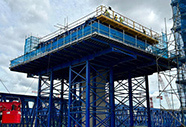
Form travellers are temporary structures that support the concrete during the casting process. They can be categorized into various types based on their design and operational mechanisms, including:
2.1. Span Form Travellers
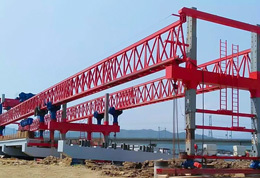
Span form travellers are typically used for constructing bridges and large spans. They can move along the structure, allowing for continuous casting.
2.2. Jump Form Travellers
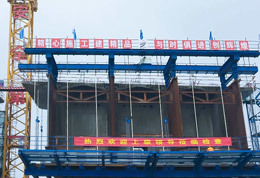
Jump form systems are used for vertical structures like high-rise buildings. These travellers move upwards as each floor is completed.
2.3. Sliding Form Travellers
Designed for rapid construction, sliding form travellers can cast large wall sections in a single operation, significantly reducing construction time.
3. The Benefits of Using Form Travellers in Construction Projects
Utilizing form travellers offers numerous advantages, including:
3.1. Increased Efficiency
Form travellers streamline the construction process by allowing continuous pouring. This minimizes downtime and accelerates project timelines.
3.2. Enhanced Safety
By reducing manual labor and the need for scaffolding, form travellers improve worker safety. They provide a stable environment for concrete placement, mitigating risks associated with high-altitude work.
3.3. Superior Concrete Quality
With precise control over the concrete pouring process, form travellers ensure a consistent mix and finish. This results in higher-quality structures with fewer defects.
3.4. Cost-Effectiveness
Although initial investments in form traveller systems can be substantial, their efficiency leads to overall cost savings through reduced labor and material wastage.
4. Key Applications of Form Travellers in Modern Construction
Form travellers are versatile tools used across various construction projects:
4.1. Bridge Construction
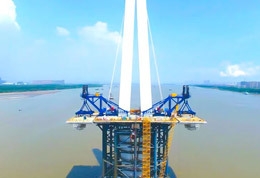
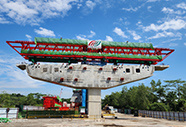
Form travellers are extensively utilized in the construction of bridges, where they facilitate the creation of complex spans and arches.
4.2. High-Rise Buildings
In urban development, form travellers enable the rapid construction of skyscrapers, allowing for vertical expansion without compromising structural integrity.
4.3. Tunnel Construction
In tunnel projects, form travellers assist in forming the walls and ceilings, ensuring stability and safety throughout the process.
5. Design and Innovation in Form Traveller Technology
Advancements in technology have revolutionized the design of form travellers. Modern systems incorporate features such as:
5.1. Modular Design
Modular form travellers allow for easy assembly and disassembly, making them adaptable for various project sizes and types.
5.2. Automated Systems
Automation in form travellers enhances precision and safety by reducing human error and optimizing the pouring process.
5.3. Integration with BIM
Building Information Modeling (BIM) technology can be integrated with form traveller designs, allowing for better planning, visualization, and execution of construction projects.
6. Case Studies: Successful Implementations of Form Travellers
Several notable projects have successfully utilized form travellers, showcasing their effectiveness:
6.1. The Golden Gate Bridge Rehabilitation
During the rehabilitation of the Golden Gate Bridge, form travellers were employed to construct new concrete sections while ensuring the bridge's stability.
6.2. The Burj Khalifa
In the construction of the Burj Khalifa, advanced jumping form travellers were crucial in achieving the building's unprecedented height while maintaining structural integrity.
6.3. Expansion of the Panama Canal
The expansion project of the Panama Canal utilized sliding form travellers to create new locks, significantly improving maritime capacity and efficiency.
7. Challenges and Solutions in Implementing Form Travellers
While form travellers offer numerous benefits, they also present challenges that require careful consideration:
7.1. Complexity in Setup
Setting up form traveller systems can be complex, requiring skilled labor and thorough planning. Utilizing experienced teams and robust training programs can mitigate this challenge.
7.2. High Initial Costs
The initial investment in form traveller technology may deter some projects. However, emphasizing the long-term savings and efficiency gains can justify the upfront costs.
7.3. Maintenance and Safety Concerns
Maintaining form traveller systems is essential to ensure safety and effectiveness. Regular inspections and adherence to safety protocols can prevent accidents and ensure smooth operations.
8. Future Trends in Form Traveller Technology and Construction
The future of form traveller technology is promising, with several trends shaping its development:
8.1. Increased Use of Smart Technologies
The integration of IoT and AI technologies into form travellers will lead to smarter systems that can monitor performance and optimize workflows.
8.2. Sustainable Practices
As sustainability becomes increasingly important in construction, form traveller designs will evolve to minimize waste and utilize eco-friendly materials.
8.3. Enhanced Customization
Future form travellers will likely offer greater customization options, allowing for tailored solutions that meet the specific needs of diverse projects.
9. Conclusion
The integration of form travellers into construction projects represents a significant advancement in the industry. By improving efficiency, safety, and the quality of concrete structures, form travellers enable contractors to tackle complex projects with confidence. As technology continues to evolve, the potential applications of form travellers will expand, making them an indispensable tool in modern construction.
10. Frequently Asked Questions
10.1. What is a form traveller?
A form traveller is a temporary structure used in construction to support the concrete during the casting process, allowing for efficient and precise construction of large-scale elements.
10.2. How do form travellers improve safety on construction sites?
Form travellers minimize the need for scaffolding and reduce manual labor, creating a safer environment for workers during concrete placement.
10.3. What types of structures benefit from form travellers?
Form travellers are commonly used in the construction of bridges, high-rise buildings, and tunnels, allowing for complex designs and rapid construction.
10.4. Are form travellers cost-effective?
While initial costs can be high, the efficiency and labor savings provided by form travellers often lead to overall cost reductions in construction projects.
10.5. How is technology changing form traveller designs?
Advancements such as modular designs, automation, and integration with BIM technology are enhancing the functionality and adaptability of form travellers in modern construction.
Key words:
Related news
WeChat:
+86 18888789997
E-mail:
New plant area:
Gaojing Village, Dongguan Street, Shangyu District, Shaoxing City, Zhejiang Province
SEND AN INQUIRY
*Leave your contact information to get a free product quote
Be a professional lifting equipment design manufacturer