Zhejiang Zhongjian Road&Bridge Machinery Co., Ltd


-
-
About us
-
-
Engineering
-
Contact
-

02
2025
-
12
Understanding Overhead Cranes: Essential Insights for Industrial Applications
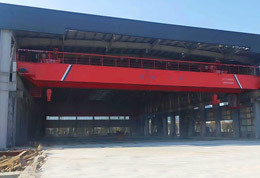
Overhead cranes are a vital component in industrial environments, playing a crucial role in the handling and movement of heavy materials. These cranes operate by using a hoist that moves along a horizontal beam, allowing for vertical lifting and lowering of loads. Their design is specifically tailored to facilitate the efficient movement of goods within warehouses, manufacturing facilities, and co
Author:
One of the key advantages of overhead cranes is their ability to maximize space. Unlike traditional forklifts, which require a significant amount of ground space for maneuvering, overhead cranes operate above the ground. This allows for more efficient use of floor space, freeing up room for other operations and reducing congestion in work areas. As a result, businesses can enhance their productivity levels while maintaining a safer work environment.
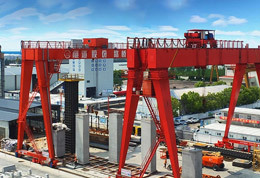
Overhead cranes come in various types, including bridge cranes, gantry cranes, and jib cranes. Bridge cranes are typically used in large facilities and have a dual-beam design that runs along tracks fixed to the building’s structure. Gantry cranes, on the other hand, are freestanding and can be moved as needed, making them versatile for outdoor applications. Jib cranes offer limited rotation and are ideal for localized lifting tasks, allowing for greater flexibility in material handling.
To maintain the efficiency and safety of overhead cranes, regular inspections and maintenance are essential. Operators should be trained to conduct routine checks on cables, hooks, and other critical components to ensure they are in good working condition. Implementing a preventative maintenance schedule not only prolongs the lifespan of the equipment but also minimizes the risk of accidents and downtime.
Safety is paramount when operating overhead cranes. It is crucial to adhere to safety guidelines and regulations to protect operators and nearby personnel. Establishing clear communication protocols and using safety gear, such as hard hats and steel-toed boots, can significantly reduce the risk of workplace injuries. Moreover, ensuring that load limits are not exceeded is essential to prevent equipment failure and accidents.
In conclusion, overhead cranes are indispensable in the industrial sector, offering a safe and efficient means of handling heavy materials. Understanding their types, applications, and maintenance requirements can significantly enhance productivity and safety in a variety of settings. By investing in proper training and maintenance practices, businesses can maximize the benefits of overhead cranes, ensuring smooth and efficient operations.
Key words:
Related news
WeChat:
+86 18888789997
E-mail:
New plant area:
Gaojing Village, Dongguan Street, Shangyu District, Shaoxing City, Zhejiang Province
SEND AN INQUIRY
*Leave your contact information to get a free product quote
Be a professional lifting equipment design manufacturer