Zhejiang Zhongjian Road&Bridge Machinery Co., Ltd


-
-
About us
-
-
Engineering
-
Contact
-


25
2025
-
11
Gantry Cranes vs. Traditional Cranes: Which is Best for Your Project?
Gantry Cranes vs. Traditional Cranes: Which is Best for Your Project? Table of Contents 1. Introduction 2. Understanding Crane Types 2.1 Traditional Cranes 2.2 Gantry Cranes 3. Key Differences Between Gantry and Traditional Cranes 3.1 Design and Structure 3.2 Load Capacity and Efficiency 3.3 Mobilit
Author:
Gantry Cranes vs. Traditional Cranes: Which is Best for Your Project?
Table of Contents
- 1. Introduction
- 2. Understanding Crane Types
- 3. Key Differences Between Gantry and Traditional Cranes
- 3.1 Design and Structure
- 3.2 Load Capacity and Efficiency
- 3.3 Mobility and Space Requirements
- 3.4 Installation and Operational Costs
- 4. Safety and Reliability Considerations
- 5. Applications of Gantry and Traditional Cranes
- 6. Making the Right Choice for Your Project
- 7. Frequently Asked Questions
- 8. Conclusion
1. Introduction
When it comes to lifting heavy loads in industrial settings, choosing the right type of crane is crucial for the success and safety of your project. **Gantry cranes** and **traditional cranes** are two popular options, each with its unique features and advantages. In this article, we will explore the essential differences between these two types of cranes, helping you determine which is best for your specific needs. Whether you're in construction, manufacturing, or any heavy-duty industry, understanding these differences can lead to better efficiency, safety, and ultimately, project success.
2. Understanding Crane Types
2.1 Traditional Cranes
Traditional cranes are often found on construction sites and are designed to lift and move heavy materials vertically and horizontally. They typically consist of a tower or boom that connects to a cab where operators control the crane's movements. **Tower cranes** and **mobile cranes** are the most common types of traditional cranes. These cranes are highly adaptable, making them suitable for a variety of applications.
2.2 Gantry Cranes
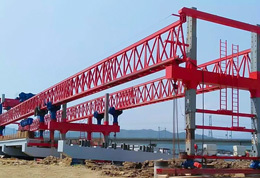
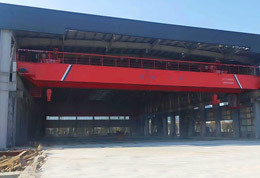
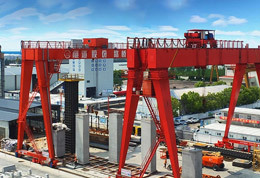
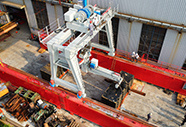
Gantry cranes, on the other hand, have a distinctive structure that consists of a beam supported by two vertical legs. This type of crane runs on a set of wheels or tracks and is ideal for indoor and outdoor lifting applications. **Gantry cranes** are especially popular in warehouses, shipyards, and manufacturing facilities due to their versatility and relatively straightforward design. They can be custom-built to accommodate project requirements, including height and span.
3. Key Differences Between Gantry and Traditional Cranes
3.1 Design and Structure
The design of a crane plays a significant role in its operation and suitability for specific tasks. Traditional cranes, often towering structures, are anchored to the ground or mounted on vehicles. They can reach significant heights and are capable of lifting heavy loads from great distances. Gantry cranes are more compact and versatile, featuring a rectangular framework that enables them to navigate through confined spaces easily.
For projects requiring **high lifting capabilities**, traditional cranes may excel, while gantry cranes offer flexibility in tight areas or workshops.
3.2 Load Capacity and Efficiency
Load capacity is a critical factor when selecting a crane for your project. Traditional cranes generally have a higher load capacity, making them suitable for lifting extremely heavy materials, such as steel beams or large machinery. On the other hand, gantry cranes typically have a lower load capacity but are designed for efficiency in lifting lighter loads over shorter distances.
For jobs requiring repeated lifting of moderate-weight items, gantry cranes can be more efficient. Their design allows for faster movement across designated tracks, enhancing workflow in environments like warehouses.
3.3 Mobility and Space Requirements
Mobility is another crucial aspect to consider. Traditional cranes can be less mobile due to their size and fixed installation. They require ample space for setup and operation, which can be a limitation on smaller job sites. Gantry cranes, however, are often designed with portability in mind. Many models are modular and can be disassembled for easy transport, making them ideal for projects that require movement between sites.
For businesses with limited space, gantry cranes offer flexibility, while traditional cranes may necessitate larger, dedicated areas for their operation.
3.4 Installation and Operational Costs
Both installation and operational costs can significantly impact your project budget. Traditional cranes often require more complex installation processes, involving heavy machinery and extensive groundwork. This complexity can lead to higher costs in both time and money. Gantry cranes, in contrast, are generally easier to install. Their simple design allows for quicker setup, resulting in lower initial costs.
Operational costs can also vary. Traditional cranes may consume more energy due to their size and load capacity. In contrast, gantry cranes can offer a more energy-efficient solution for lighter loads and shorter distances, potentially lowering overall operational expenses.
4. Safety and Reliability Considerations
Safety should always be a top priority when selecting lifting equipment. Both gantry and traditional cranes incorporate various safety features to protect operators and the surrounding workforce. Traditional cranes are equipped with advanced technology, including load-sensing systems and remote controls, enhancing safety during operation.
Gantry cranes also prioritize safety with features like emergency stop buttons, anti-collision systems, and safety locks. While both types of cranes are reliable, traditional cranes may have an edge in safety technology due to their advanced engineering. Regular maintenance and operator training are essential for both crane types to ensure optimal safety performance.
5. Applications of Gantry and Traditional Cranes
Understanding the applications of each crane type can help guide your decision-making process.
- **Traditional Cranes:** These cranes are commonly used in construction sites for building skyscrapers, bridges, and large-scale infrastructure projects. They are also widely used in the shipping industry for loading and unloading cargo ships due to their impressive lifting capabilities.
- **Gantry Cranes:** These cranes are often employed in manufacturing facilities, warehouses, and automotive repair shops. Their versatility makes them suitable for moving materials, assembling parts, and providing strong support for tasks requiring overhead lifting.
Assessing the specific applications of each crane type can assist in making an informed choice tailored to your project needs.
6. Making the Right Choice for Your Project
Choosing between gantry cranes and traditional cranes requires careful consideration of several factors, including load capacity, space availability, project type, and budget constraints. Start by evaluating your project requirements:
1. **Assess Load Requirements:** Identify the weight and type of materials you will be lifting. For heavy loads, traditional cranes may be necessary.
2. **Evaluate Space Constraints:** Determine the space available for crane operation. Gantry cranes excel in confined spaces.
3. **Consider Project Duration:** For longer projects requiring frequent lifting, efficiency and installation time should be prioritized.
4. **Budget Constraints:** Analyze both initial and operational costs associated with each crane type to ensure financial feasibility.
By thoroughly assessing these factors, you can make a decision that aligns with your operational needs, safety standards, and budgetary constraints.
7. Frequently Asked Questions
What is the main advantage of a gantry crane over a traditional crane?
Gantry cranes are more versatile and easier to set up in confined spaces, making them ideal for indoor applications or smaller job sites.
Can gantry cranes handle large loads like traditional cranes?
While gantry cranes can handle moderate loads effectively, traditional cranes generally have a higher load capacity and are better suited for extremely heavy lifting tasks.
What are the safety features of gantry cranes?
Gantry cranes typically include emergency stop buttons, anti-collision systems, and safety locks to ensure safe operation.
How much does it cost to install a traditional crane compared to a gantry crane?
Traditional cranes usually involve more complex installation processes, resulting in higher initial costs compared to the simpler setup of gantry cranes.
Which crane type is better for outdoor construction projects?
Traditional cranes are often better suited for outdoor construction projects due to their high lifting capabilities and stability in various weather conditions.
8. Conclusion
In the debate between **gantry cranes** and **traditional cranes**, there is no one-size-fits-all answer. Each crane type has its unique benefits and drawbacks, making it essential to consider your specific project requirements before making a decision. By evaluating factors such as load capacity, space constraints, installation and operational costs, and safety features, you can choose the crane that aligns best with your project’s goals. Ultimately, the right choice will enhance your operational efficiency and lead to greater success in your industrial endeavors.
Key words:
Related news
WeChat:
+86 18888789997
E-mail:
New plant area:
Gaojing Village, Dongguan Street, Shangyu District, Shaoxing City, Zhejiang Province
SEND AN INQUIRY
*Leave your contact information to get a free product quote
Be a professional lifting equipment design manufacturer