Zhejiang Zhongjian Road&Bridge Machinery Co., Ltd


-
-
About us
-
-
Engineering
-
Contact
-

22
2025
-
11
Understanding Overhead Cranes: Essential Knowledge for Industrial Professionals
Overhead cranes are pivotal in various industrial settings, known for their efficiency in lifting and moving heavy loads within a defined space. These cranes are typically mounted on a bridge that travels along elevated tracks, allowing them to manipulate materials with precision and ease. Understanding the mechanics and applications of overhead cranes can significantly enhance productivity and sa
Author:
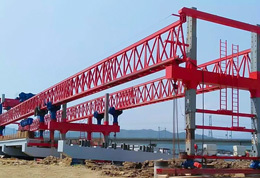
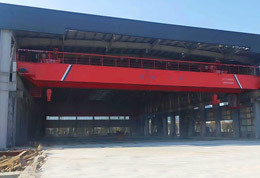
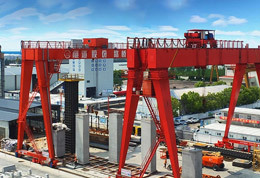
There are several types of overhead cranes, with the most common being bridge cranes, gantry cranes, and workstation cranes. Bridge cranes consist of two parallel runways, supporting a hoist that moves horizontally across the bridge. This design is ideal for large warehouses and manufacturing facilities where heavy items are frequently relocated. Gantry cranes, on the other hand, are similar in functionality but are supported by legs, allowing them to move across an area without the need for permanent runways. Workstation cranes offer a lightweight solution, perfect for smaller loads and confined spaces, providing flexibility in tasks without compromising on safety.
One of the key advantages of overhead cranes is their ability to maximize vertical space. By utilizing the overhead area, businesses can free up floor space for other operations, enhancing overall efficiency. They play a crucial role in sectors such as manufacturing, logistics, construction, and shipping, where heavy lifting is a daily requirement. Their versatility allows for the handling of various materials, from steel beams to massive containers.
When operating overhead cranes, safety is paramount. Operators must be well-trained in the use of these machines to prevent accidents and ensure compliance with industry regulations. Regular maintenance checks are essential to keep the equipment in optimal condition, as this can help detect potential issues before they lead to malfunctions. In addition, the use of safety features, such as limit switches, anti-collision systems, and emergency stop buttons, can further enhance operational safety.
In summary, overhead cranes are indispensable tools in the industrial sector, streamlining the process of lifting and transporting heavy materials. By understanding their types, applications, and safety precautions, professionals can leverage these machines to improve efficiency and safety in their operations. Whether in manufacturing plants or construction sites, the integration of overhead cranes into workflows can lead to significant operational advancements, making them a critical aspect of modern industrial equipment.
Key words:
Related news
WeChat:
+86 18888789997
E-mail:
New plant area:
Gaojing Village, Dongguan Street, Shangyu District, Shaoxing City, Zhejiang Province
SEND AN INQUIRY
*Leave your contact information to get a free product quote
Be a professional lifting equipment design manufacturer