Zhejiang Zhongjian Road&Bridge Machinery Co., Ltd


-
-
About us
-
-
Engineering
-
Contact
-

12
2025
-
11
Understanding Overhead Cranes: Essential Knowledge for Industrial Operations
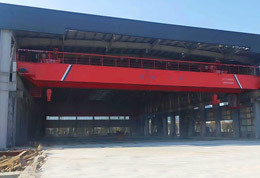
Overhead cranes are crucial components in many industrial settings, designed to lift and transport heavy loads with precision and ease. These cranes typically consist of a horizontal beam, known as a bridge, which moves along two horizontal tracks. Attached to the bridge is a hoist that can lift and lower loads vertically, making overhead cranes essential for handling materials in warehouses, manu
Author:
One of the primary advantages of using overhead cranes is their ability to optimize workspace. By utilizing vertical space, these cranes minimize the need for ground-level equipment and allow for more efficient layout designs in factories and warehouses. This not only enhances productivity but also contributes to a safer working environment, as it reduces the risk of accidents associated with moving heavy loads on the floor.
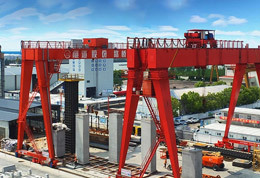
There are several types of overhead cranes, each suited for specific applications. The most common types include bridge cranes, gantry cranes, and jib cranes. Bridge cranes are mounted on elevated tracks and can travel along the length of a facility, making them ideal for large-scale operations. Gantry cranes, on the other hand, are freestanding structures that can be moved to different locations, offering flexibility in various tasks. Jib cranes are smaller and typically used for localized lifting tasks, proving beneficial in confined spaces.
Safety is paramount when operating overhead cranes. Operators must be properly trained to understand the limits of the crane's load capacity and to recognize the importance of regular maintenance checks. This includes inspecting the hoist, cables, and controls to ensure everything is functioning correctly. Moreover, implementing safety protocols, such as using proper signaling methods and wearing personal protective equipment (PPE), can significantly reduce the risk of accidents during operation.
Overhead cranes are also equipped with advanced technologies, such as load sensors and remote controls, enhancing their operational efficiency and safety. These innovations allow for more precise handling of loads and can be integrated with automated systems for seamless production processes.
In summary, overhead cranes are indispensable in the industrial sector, providing unparalleled advantages in material handling. Understanding their functionality, types, and safety considerations is essential for maximizing efficiency in operations. By investing in the right overhead crane and ensuring proper training and maintenance, companies can significantly enhance their productivity and create a safer work environment.
Key words:
Related news
WeChat:
+86 18888789997
E-mail:
New plant area:
Gaojing Village, Dongguan Street, Shangyu District, Shaoxing City, Zhejiang Province
SEND AN INQUIRY
*Leave your contact information to get a free product quote
Be a professional lifting equipment design manufacturer