Zhejiang Zhongjian Road&Bridge Machinery Co., Ltd


-
-
About us
-
-
Engineering
-
Contact
-






25
2025
-
11
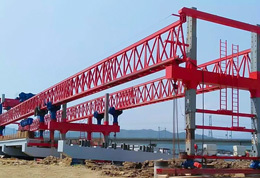
Beam Launcher: Precision Energy Delivery for Scientific, Industrial, and Defense Applications
A beam launcher emits precise, high-energy beams for scientific, industrial, or defense applications, ensuring accurate targeting and controlled energy delivery.
Author:
A beam launcher is an advanced device engineered to emit focused energy beams with high precision and controlled intensity. It is widely used across scientific research, industrial applications, and defense systems due to its ability to deliver concentrated energy to a specific target with minimal dispersion. The term "beam" can refer to various types of energy forms, including laser beams, particle beams, or electromagnetic waves, depending on the intended application. Beam launchers are designed to achieve accuracy, efficiency, and reliability in energy transfer, making them critical tools in modern technology and research environments.
Design and Components
Beam launchers are composed of several key components that work together to generate, guide, and control the energy beam. The primary elements include:
Energy Source: This can be a laser diode, particle accelerator, or electromagnetic generator, depending on the type of beam. The energy source determines the power, wavelength, and intensity of the emitted beam.
Optical or Magnetic Guidance System: Beam launchers often use lenses, mirrors, or magnetic fields to focus and direct the beam with precision. This ensures minimal divergence and maximum energy concentration on the target.
Control System: Advanced electronics manage beam parameters such as duration, intensity, and targeting accuracy. Computerized control allows for automation, remote operation, and real-time adjustments.
Safety Mechanisms: Given the high energy involved, safety interlocks, shields, and monitoring systems are integrated to prevent accidental exposure or damage to operators and surrounding equipment.
Applications in Science and Research
In scientific research, beam launchers are essential for experiments requiring controlled energy delivery. Laser beam launchers, for example, are used in spectroscopy, photonics, and material analysis. Particle beam launchers play a crucial role in physics research, such as particle collision experiments and nuclear studies. These systems provide precise energy input for experimental accuracy, allowing scientists to observe, measure, and manipulate phenomena at micro and nano scales.
Industrial Applications
In industrial settings, beam launchers are employed for material processing, cutting, welding, and surface treatment. Laser beam launchers offer precise cutting capabilities with minimal material waste and high efficiency. They are used in automotive manufacturing, electronics production, and aerospace engineering. Particle or electron beam systems are applied in semiconductor fabrication, sterilization processes, and advanced coating technologies. The controlled energy delivery ensures consistent quality and enhances production speed while reducing operational costs.
Defense and Security Applications
Beam launchers also have critical applications in defense and security. High-energy laser systems can serve as precision targeting or missile defense solutions, providing rapid response and reduced collateral damage. Directed energy weapons rely on beam launchers to deliver concentrated energy to neutralize threats effectively. Electromagnetic beam systems are explored for communication disruption, radar countermeasures, and tactical applications. Safety, reliability, and precision are paramount in defense-related beam launcher design, requiring robust engineering and advanced control technologies.
Key Advantages
Beam launchers offer several significant advantages:
Precision Targeting: Ability to direct energy accurately to a specific location with minimal dispersion.
Controlled Energy Output: Adjustable intensity and duration for tailored applications.
Versatility: Suitable for a range of energy types, from lasers to particle streams.
Efficiency: Focused energy reduces waste and enhances performance in both research and industrial processes.
Automation and Remote Operation: Modern systems allow computer-controlled operations, ensuring repeatability and safety.
Maintenance and Safety Considerations
Due to the high-energy nature of beam launchers, proper maintenance is essential to ensure reliability and longevity. Regular calibration, inspection of optical or magnetic guidance systems, and verification of control electronics are critical. Safety measures, including protective enclosures, warning systems, and operator training, are mandatory to prevent accidents and ensure compliance with regulatory standards.
Future Developments
Research and development in beam launcher technology continue to advance, focusing on higher energy efficiency, miniaturization, and enhanced precision. Emerging applications in medical therapy, space exploration, and advanced manufacturing rely on continuous improvements in beam quality, targeting control, and safety mechanisms. The integration of artificial intelligence and adaptive control systems is expected to enhance the capabilities and versatility of beam launchers in the near future.
Conclusion
Beam launchers are sophisticated devices that play a vital role in modern science, industry, and defense. By providing precise, controlled energy delivery, they enable advanced research, efficient manufacturing, and strategic defense applications. With continued technological innovation, beam launchers will remain essential tools for high-precision, high-performance energy applications across multiple fields.
Key words:
Related news
WeChat:
+86 18888789997
E-mail:
New plant area:
Gaojing Village, Dongguan Street, Shangyu District, Shaoxing City, Zhejiang Province
SEND AN INQUIRY
*Leave your contact information to get a free product quote
Be a professional lifting equipment design manufacturer